Neurospicy Literal Thinking
I used to hear “love is love” only as a rallying cry for equality in romantic relationships, especially in the LTBTQ community. Beautiful, necessary—yes. But recently, I heard it explained in a way that unhooked my brain from a single pedestal: it’s not just about who we date. It’s about decentering romance as the main character and honoring every form of love that keeps us alive—family love, platonic love, community love, the kind we build on a dancefloor at 2 a.m. when the bass is deep and everything feels electric and soft.
As someone who is AuDHD, I tend to think literally. For years, I put romantic love at the top, hyper-fixating on partners, building pedestals, and confusing intensity with priority. That love wasn’t “wrong,” but it became the only lens I knew. Relearning “love is love” is me widening that lens. It’s recognizing that the love I share with friends—especially in the rave scene—is not the understudy of romance. It’s a headliner of its own kind: dependable, playful, ritual-rich love that is just as intimate and just as life-giving. Let me tell you, intimacy was another word I had to also relearn.
This is about how I’m learning to love widely: through presence, boundaries, and care. It’s also about beads, perlers, and Narcan—and why those tiny details matter.
Love Beyond the Pedestal
Romance is one kind of love—not the summit. When I decenter it, I can:
- Give my friends the depth I once saved only for partners.
- Stop treating romantic attention as proof of worth.
- Let each kind of love be complete on its own terms.
When I treat platonic love like it’s “real love,” my nervous system calms down. I’m less likely to spiral into all-or-nothing thinking with partners. I can pour care into friendships without feeling like I’m “misplacing” it. I can feel whole—because I’m connected.
I’m not anti-romance. I’m anti-monopoly. The more I honor friendship, the more generous my life becomes—because love stops bottlenecking through one person or one idea of “forever.” Perlers on a wrist, a hand on a shoulder, a bottle of water pressed into your palm—these are vows, too. Small ones, repeated often, and somehow more honest than grand speeches shouted over subwoofers.
“Love is love” means all these loves count. The rave, the craft table, the group chat, the ride home. The ways we make space for each other’s minds and bodies. The ways we leave no one behind when the sun comes up.
If you’ve been waiting for romance to give you permission to feel deeply, consider this your sign: your friendships are already profound. Your community is already a love story. And that beadwork around your wrist? That’s a little, wearable proof
A Raver’s Guide to Loving Your Friends Well
The dancefloor is a living ecosystem. Loving your people there is both poetic and practical.
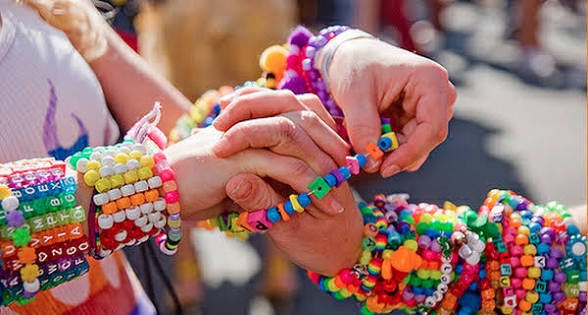
1) Rituals of Care: Trinkets, Kandi, and Perlers
- Kandi bracelets: Little wearable promises. I make them with colors and words that remind my friends who they are: “ENOUGH,” “HYDRATE,” “BE KIND” and “SAFE” along with some spicy or sassy phrases. “Butt water” is still my favorite.
- Perlers: Pixel art made from fuse beads—charms, necklaces, pendants. I started making custom perlers for friends with their favorite symbols, artists, or inside jokes. It’s a love letter in beads: time, attention, embodiment. Perlers feel like talismans—tiny shields that say “you belong here.”
- Gifting etiquette:
- Ask and offer, don’t assume. “Can I gift you a kandi/perler?”
- Consent, even for sweetness. Not everyone likes being touched or surprised.
- Trade with intention. The point isn’t quantity; it’s connection.
These objects aren’t just cute—they’re anchors. For AuDHD brains, tangible tokens help recall safety and belonging when the crowd overwhelms.
If you’ve been waiting for romance to give you permission to feel deeply, consider this your sign: your friendships are already profound. Your community is already a love story. And that beadwork around your wrist? That’s a little, wearable proof.
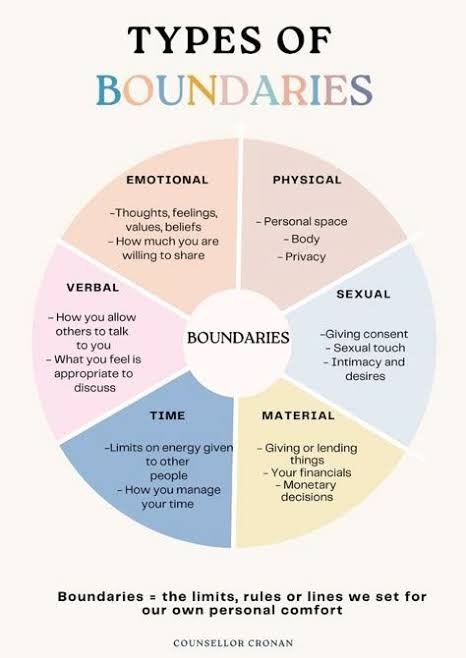
2) Listen for Needs and Boundaries (And Believe Them)
- Before the event: “What do you need to feel safe tonight? Any hard nos? Any early exits?”
- During: “Color check—green/yellow/red?” Short, concrete check-ins work well in loud spaces.
- After: “Anything I missed? Anything you want different next time?”
Scripts that help:
- “I’m stepping out for air for 10 minutes—want company or solo?”
- “I don’t want substances tonight, please don’t offer.”
- “No photos for me tonight.”
- “I’m overstimulated—can we find a wall/exit/earplug break?”
Boundaries are love in action. They’re not a wall; they’re a map.

3) Harm Reduction Is Love
Not medical advice—just community care principles to learn and personalize.
- Carry Narcan (naloxone) and learn to use it. Many cities offer free kits and brief trainings; check expiration dates and storage guidelines.
- Test substances. Reagent test kits save lives. If it’s not tested, rethink it. Dancesafe.org is a good option before hand and often times, you can find them at events as well.
- Hydration + electrolytes. Water is great; add salts so you don’t crash.
- Earplugs or in my case, HEADPHONES. Protect your future joy—tinnitus is forever.
- Buddy system. Arrive together, leave together. Share live locations if comfortable.
- Cooling and Food breaks. Overheating sneaks up. Schedule breathers. Nothing has saved my ass better than Chicken Tendies on multiple occasions. If you’re taking any form of party favors for the night, please be smart and have some sort of food in your system for the day. And REFUEL. Carrying Candy is also a go to of mine and has helped a few people in their Crash outs.
- Consent culture. Ask before touching, filming, or posting. “No” is a full sentence. Something I’ve also learned not through my parents, but honestly through the rave scene. And no matter how I learned, I am still thankful and will teach what I know. I’ve also had my ass grabbed by people who think a cute girl is free terrain for that. It’s NOT. Looking cute is NOT consent.
Harm reduction says: I want you alive, free, and dancing next week too.
4) Being Yourself Is Also a Gift
For a long time, I thought I had to perform a certain version of “good friend.” Now I’m practicing:
- Naming my limits without shame: “I can stay until 1 a.m. and then I need my quiet.”
- Claiming my sensory needs: breaks, stim toys, preferred spots in the venue.
- Bringing my interests: perler crafting, kandi sessions, playlist swaps, nerdy deep dives.
- Sharing my timeline: “I respond slowly after events. I still care.”
The right people don’t need the performance. Your unvarnished presence gives them permission to be real too.
Reframing Hyperfocus as Care, Not Control
Hyperfixation once made me see partners as the axis of my world. I’m learning to channel that focus into community care that doesn’t consume or control.
- Make a “care kit” bin: earplugs, band-aids, gum, cough drops, electrolytes, hand sanitizer, hair ties, spare battery, granola, wet wipes, small perlers or kandi for morale boosts.
- Build perler nights: quiet pre-rave hangs where we craft, chat boundaries, and plan rides. It’s social, soothing, and sets everyone up to feel held.
- Rotate roles: one person handles hydration reminders, another watches the time for breaks, another navigates the map. Shared care prevents burnout.
Micro-Moments of Love on the Dancefloor
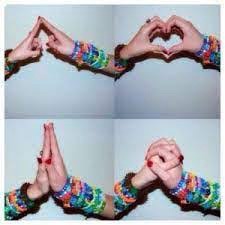
Tiny things that change the night:
- A perler presented to someone right before their favorite drop.
- A hand signal: “water?” “earplugs?” “exit?” established ahead of time.
- Standing shoulder-to-shoulder at the edge, letting a friend decompress.
- A text the next morning: “You were radiant last night. Thank you for dancing with me.”
These moments are small, but they stitch a community together.
What “Love Is Love” Means to Me Now
- Love is the kandi I knot with your name and the perler I melt just right so it won’t break.
- Love is carrying Narcan because I want you home safe.
- Love is accepting your “no” and trusting your body’s wisdom.
- Love is a boundary that keeps the friendship renewable.
- Love is letting romance be love—and letting friendship be love, too, without ranking them.
I’m still literal. Maybe I always will be. So here’s my literal translation now: love is love is love is love, and the shape it takes—romantic, platonic, familial, communal—doesn’t change its worth. When we stop crowning one form, the rest can finally breathe.
And on the nights when the bass is heavy and the lights blur and the crowd surges, I’ll be the one with earplugs, water, Narcan, and batch of homemade perlers—reminding you that you are loved, and already enough.
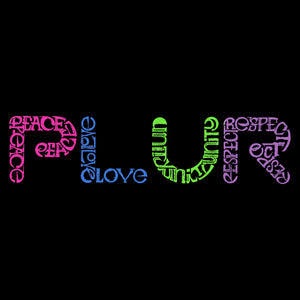
Perlers, PLUR, and the Language of Friendship
In rave spaces, love shows up in objects and rituals. Not in diamonds or dozen red roses as I had seen in movies (I instantly thought of the Scene in The Room where the main character buys a dozen red roses), but in perlers—crafted necklaces, cuffs, charms, and keychains made from fused Perler beads. They’re tiny mosaics of care, traded and gifted with a little ceremony: hand to hand, palm to palm, a look in the eyes, a hug if consented. It’s art, but it’s also a message: I see you. I thought of you. You belong here.
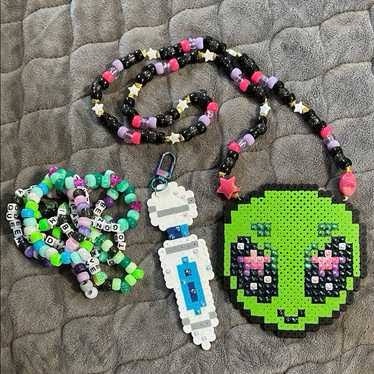
- Perlers are time made tangible. Someone sat down and chose your colors, your symbols, your initials, that inside joke only five people would get.
- They’re community memory. You can hold one and remember the exact moment you received it—the bassline, the sweaty joy, the laughter.
- They’re gentle social bridges. For those of us with social anxiety or who are neurodivergent, trading perlers can be the perfect script: offer, connect, smile, move at your own pace.
The more I’ve leaned into this, the more I’ve felt romance stepping off the pedestal. The love I feel when a friend ties a perler around my wrist is not “less than.” It’s not practice for “real love.” It is real love—just arranged differently.
Rewriting Intimacy: Friendship as a Primary Relationship
Here’s what I’m learning to name out loud:
- Friendship can be primary. It can be the relationship you plan your week around, the bond you protect with boundaries and repair with care.
- Intimacy isn’t a genre reserved for romance. It’s how we share playlists, check each other’s water bottles, swap earplugs, and walk each other to the bathroom at 2 a.m.
- Commitment is not measured by labels alone. It’s measured by who shows up when the lights come on and the glitter has to be cleaned off the floor.
When I stopped expecting romance to be the sole container for depth, I noticed how deep my friendships already were. Friends who bring me my stim toys without asking. Friends who text “home safe?” before they even get in their Uber. Friends who know the exact moment I need to step outside, breathe, and find a quieter corner of the world.
Romance is one kind of love—not the summit. When I decenter it, I can:
Give my friends the depth I once saved only for partners.
Stop treating romantic attention as proof of worth.
Let each kind of love be complete on its own terms.
When I treat platonic love like it’s “real love,” my nervous system calms down. I’m less likely to spiral into all-or-nothing thinking with partners. I can pour care into friendships without feeling like I’m “misplacing” it. I can feel whole—because I’m connected.
AuDHD, Sensory Care, and the Dancefloor
As an AuDHD raver, I used to think my needs were “extra.” Now I see them as a map for kinder spaces:
- Sensory planning: Knowing the venue layout, where the quieter edges are, and how to get fresh air quickly.
- Communication tools: A “thumbs up/down” check-in, color cards, or just a sentence like, “If I step away, I’ll be back soon.”
- Self-soothing: Chewelry, stim toys, soft textures, predictable snacks. These are not quirks—they’re gear.
- Exit strategies: It’s okay to leave early or to choose a spot where you can sway instead of bounce. Dancing is not a test.
When friends honor these needs, I don’t feel “managed”—I feel loved. And when I honor theirs, I feel the power of being part of something that treats difference as a feature, not a glitch.
Rituals That Keep Us Close
A few friend rituals I love that make community feel sturdy:
- Trade perlers at sunset before the first big set, with a quick intention for the night.
- Do a “gear circle” before going in: water, plugs, meds, ID, plan.
- Pick a “home base” and name it (“the left tree,” “glow arch,” “back of stage right”).
- After the show, share three gratitudes—one for the music, one for someone in the crew, one for yourself.
- Once a month, have a crafting hang—remind yourselves love isn’t event-dependent.
Hope this guide can help yourself rethink the phrase “love is love” like it has for me. Thank you for reading!
-Shae
 Swipe Left On Perfection
Leave a comment