Swipe Left On Perfection

Oh, Just another 40 year old AuDHD woman with a lot to say….after maybe a side quest or two.

  • I live a small life, on purpose.
    Mornings chowing down protein
    laundry half-folded on the chair, floor, bed
    keys lost in the same old bag.

    I am not a masterpiece of order,
    I am a patchwork of “almost done”
    and “I tried”
    and “maybe tomorrow.”

    Some days, the world is too loud
    emails piling like storm clouds,
    heart beating fast over nothing and everything.
    I let it crest.
    I let the wave come.
    I whisper to myself,
    You are allowed to feel this.

    I close my eyes,
    and instead of drowning,
    I practice floating.
    breathing in, breathing out,
    letting my chest rise like a white flag of surrender
    instead of a warning flare.

    Grace is not clean.
    Grace is shaking hands
    that still reach for the glass of water.
    Grace is tear-streaked cheeks
    that still turn toward the sun.
    Grace is saying,
    “I’m overwhelmed,”
    and not apologizing for it.

    I am held together
    by the people who love me messy.

    Friends who don’t flinch
    at my half-finished sentences,
    who sit on the floor with me
    amongst takeout boxes and tangled thoughts,
    who laugh at the wrong moments
    and make everything feel
    a little less sharp.

    They let me speak in fragments,
    change the subject,
    double back.
    They understand that some stories
    arrive out of order,
    and some don’t want an ending yet.

    And then there is him.

    The boy with kind eyes
    and the patience of a slow sunrise,
    who listens to my pauses
    as if they’re part of the song,
    who holds my hand
    like it’s a promise, not a question.

    He does not iron out my sorrow,
    does not rush the ache from my bones.
    He knows grief isn’t linear,
    that it leaves, then returns
    with salt on its teeth
    and memories between its waves.

    On the days it comes back
    wearing the faces of what I’ve lost,
    he doesn’t build a dam.
    He builds a shoreline.
    He sits beside me in the quiet,
    thumb tracing circles on my palm,
    as if to say,
    “I’m here for every version of you.”

    When my voice cracks open
    and the old hurt spills out,
    he doesn’t offer quick fixes
    or silver-lining speeches.
    He offers presence.
    He offers stillness.
    He offers his shoulder
    and the steady rhythm of his breath
    like a metronome reminding me
    my heart is still keeping time.

    With him, I am allowed to be soft,
    to unclench my jaw,
    to stop rehearsing sentences
    and simply let them fall.

    He lets me listen
    to my own needs,
    to the quiet yes inside my chest,
    to the parts of me that are learning
    how to receive
    without shrinking.

    I don’t have to earn affection
    by being perfect,
    or predictable,
    or perpetually “okay.”

    Love, here, is not a test I study for.
    It is a room with the lamp left on,
    where I can come home late
    with swollen eyes and tangled hair
    and still be welcomed
    with a soft, “I’m glad you’re here.”

    Living simply doesn’t mean
    my life is empty of storms.
    It means I no longer pretend
    to be made of stone.

    It means burning the fancy candles
    on ordinary Tuesdays,
    answering texts late
    without hating myself for it,
    choosing gentle mornings
    over relentless productivity.

    It means letting my heart be
    a lived-in place
    scuffed floors,
    open windows,
    flowers that sometimes wilt
    but somehow keep growing.

    I am learning that wholeness
    is not a polished, shining thing.
    It’s the quiet courage
    of waking up again,
    of sitting with what hurts
    without turning away,
    of leaning into arms that say,
    “Take your time.”

    So I live my life in small, honest ways:
    one deep breath,
    one honest tear,
    one hand held through the dark.

    I am not done grieving,
    not done healing,
    not done becoming.

    But in the middle of it all,
    surrounded by friends who hold my chaos
    and a love that honors my pace,
    I find these soft, sacred moments

    Ones where my heart loosens,
    my shoulders drop,
    and for a little while,
    doing nothing more than existing
    is more than enough.

  • Manifesting Generator


    On Rescheduling My Life

    I want to start with the obvious: I’ve been moving this blog around a lot.

    Posts delayed. Ideas shifted. Timelines stretched. From the outside, it might just look like poor planning or “life happens,” but underneath it, there’s been a lot of change. The kind of change that rearranges you from the inside out.

    Lately, I’ve felt like I’ve been rescheduling more than just my content—I’ve been rescheduling my life, my priorities, my relationships, and my identity.

    And I want to talk about that.


    Finding Out I Have a Sister

    Somewhere in the middle of all this, I found out I have a half-sibling.

    A sister. Older than me.

    That sentence alone holds so much: shock, grief, curiosity, validation, and oddly, relief. It felt like a missing puzzle piece I didn’t know I was searching for finally dropped into place.

    We share more than DNA—we share patterns. We’re both neurodivergent. We’re both highly sensitive people. HSP. We’ve lived these weirdly parallel lives without knowing each other, both questioning where certain traits, reactions, and sensitivities came from. Suddenly, some of those questions had answers.

    At the same time, this discovery didn’t magically repair everything around it. If anything, it highlighted certain wounds and dynamics even more. I’ve had to place distance on ties that harm me, even when I love the people on the other end of those ties. I can love them and still keep them away from me. Both can be true.

    I gained a sister and some answers—but I also gained clarity on where my boundaries need to be. And that’s been its own kind of growing pain.


    Transitioning, Again: From Caregiving to Campus

    On the career side, life has been just as transitional.

    Before caregiving, I started as a trainer. And I loved it. Teaching, guiding, helping people grow—that’s my zone. That’s where I feel the most myself, the most useful, the most lit up from the inside.

    But caregiving came with something training didn’t always offer at the time: steady pay.

    So I chose caregiving out of fear.

    Not because I didn’t love helping people (I did, deeply), but because I didn’t fully believe in my ability to sell my training, to stand in it, to say, “This is valuable and I’m worth being paid well for it.”

    Caregiving was a role I took on because I wanted to help others, understand others, defend others. I wanted tangible skills. I wanted to know that if a spouse or a parent ever got sick, I could care for them, not just in theory, but in practice.

    But somewhere along the way, it pulled me away from my original passion.

    So now, I’m in this in-between phase. I’ve been transitioning out of caregiving, and I’ve taken a role at a university.

    The hiring process was… a lot. Gruesome, honestly. Long, exhausting, layered. But my intuition told me I had the job the moment I walked out of the interview. There was this grounded sense of, “This is mine” before anyone ever called me.

    And I was right.

    They’ve been kind to me. They’ve respected my need for small accommodations. But they’ve also been stretching me. Teaching me social skills I didn’t realize I was missing. Showing me how to really listen. How to receive feedback without instantly translating it into criticism. How to pause and ask, “Is this about my worth, or is this about my growth?”

    This job isn’t my final destination, but it’s an important bridge. It’s teaching me how to exist in community again, how to handle feedback, how to sit in rooms where people see me and reflect things back that I didn’t want to see, but needed to.

    And slowly, I’m finding the courage to move back toward my original passion: training. My life’s work. The place I can make the deepest difference in myself and others. The work that fuels me to be my best, inside and out.


    Feeling My Feelings Instead of Studying Them

    Somewhere in this mix of new family, new job, and old passions resurfacing, I took a Human Design quiz—for fun.

    I didn’t expect it to read me like a diary.

    It told me that when I’m out of alignment, I act from frustration. And that my gut—my fast, immediate answers—is how I operate best. I’ve always known that about myself on some level, but seeing it laid out like that hit different.

    And if that wasn’t the realest lesson I’ve had about feeling my emotions instead of intellectualizing them…

    I’ve spent a lot of my life trying to analyze my way out of pain. Think it through. Find the lesson. Make it logical. Be “good.” Be reasonable. Be understanding.

    But this season hasn’t let me bypass the actual feeling part.

    It’s been painful.
    It’s been agonizing at times.
    But it’s also been worth it.

    Because for the first time, I’m watching myself become almost unrecognizable—in a good way. Less apologetic. Less performative. Less desperate to be understood or chosen. I’m needing less from the outside because I’m finally giving more to myself on the inside.

    Human Design also helped me see where I’ve failed in my relationships. Not in a self-hate way, but in a clear, sober way.

    I saw what I tolerated.
    Where I over-gave.
    Where I couldn’t hold space for someone else’s process because I was drowning in my own.
    How that might have made others feel unseen, or pressured, or not enough.

    That’s a hard mirror to look into. But I’m grateful for it now.


    On Love, Loss, and Letting People Be Happy Without You

    I miss my ex sometimes.

    Little things remind me of him sometimes. A song, a Waymo, a random moment or joke that makes me think, “He’d get this.” And when that happens, I let myself feel it now instead of shoving it down or shaming myself for it.

    I really do wish him happiness.

    And I also honor my own experience. I was allowed to feel like we were both being hypocritical at times. I was allowed to feel angry at him for overseeing my pain a lot of the time, no repair. Angry at myself for ignoring my gut when I’d notice patterns of disrespect and requests not to be compared just would go disregarded while it was a sin for me to not understand someone’s boundaries and cross them. Granted, I did and I ended up hurting someone’s feelings. Remorseful that I hurt his feelings in any way. But my growth was happening, it was never believed, the good I did do was overlooked a lot, and at the end of the day, I really did love them, I really was trying to be healthy for me, because it would benefit him, but it grew not as fast as he think it did. I said it long before I felt it th way it’s said by most people. I meant it originally as a phrase of appreciation for a person. A human. A man who wasn’t perfect but was damn close, in my eyes. My love for him had only truly begun at liquid stranger. It grew the more I saw he wasnt perfect but that I loved him no different. Even his avoidant patterns, I had decided I could love him through as well because well, I didn’t want to change him. What I failed to understand was how to support what he SAID he had wanted which was to be more secure in the connection, be less avoidant. But I never felt safe again after being vulnerable about how my brain freezes, and drops events, my experience in my body, my lack of medical, my jobs, and seeking more when they were received with dismissal. Minimizing. I often felt built up in some moments because it’s what the kind thing to do but duality. Wounding would also cause harm in hurtful ways to me. Indifference and Contempt in someone is a tough pill to swallow when directed your way from a sometimes loving source. And of course saying I love you one minute while saying I like you the next would make any one who was trying to gain security question the connection, as well as if you always brought up wanting to date other people when voicing something I was feeling than was deemed negative for them. That’s made to keep someone off balance. Intended or not, he made the right call to break up. I wasn’t ready for that step YET but I wanted us to have that discussion to clear up confusion before it got to that too. I even wrote about it the day I was broken up with in my journal. But it gave me a good idea of where to focus my healing. Enjoying the feeling of being alive.

    I wondered if it was the way I felt. Some of it. But some of it was him. Not his looks. Not his body or his mind. Just simply him. But I suppose I was confused on what our connection actually was and I did see his potential to be not afraid as I saw mine but I was told I was wrong to only care about potential. I didn’t. I have depth. I cared about his potential to be better, as mine, BUT also as who he is, even when it hurt. What felt like begging to me was saying to him twice “please don’t do this.” But I ultimately knew I would also be fine, as I told him.

    For a long time, I felt like the narrative around me was that I didn’t care. That I cared more about the loss of him than the hurt I caused him. And that wasn’t true. My personality was built around being the “good girl.” The reliable one. The one who doesn’t hurt people.

    So the idea that I hurt him gutted me. I turned that pain inward. I shamed myself. I spiraled.

    With time, distance, and a lot of uncomfortable honesty, I’ve been able to look more clearly at the dynamic:

    I was over-helping.
    He wasn’t present.

    We were both playing roles we probably learned very young. I tried to earn closeness by doing, fixing, and supporting. He stayed further back, maybe protecting himself in his own way. It wasn’t all bad, and it wasn’t all good. But it was ours. And it taught me what I will no longer abandon myself for. I’m valuing those who value me. I choose those who choose me. I make mistakes and I am human, but I am LEARNING, and have ALWAYS been growing. I have been patient. And will continue as such.

    Now, I’m coaching myself again. I feel more confident in my alignment. I feel I am living in it again more each day. I check in with my gut more. Trust my fast answers more. Let myself feel the waves of anger, grief, gratitude, and love instead of trying to explain them away.

    I love the person I’m becoming more now:
    More grounded.
    More honest.
    More sovereign.
    More willing to choose myself without needing anyone else to be the villain.


    Why the Blog Is Moving, But I’m Finally Rooting

    So yes, the blog has been moved around a lot lately.

    But that’s because I have been moved around a lot lately by life, by family revelations, by career shifts, by heartbreak, by growth, by my own intuition finally getting the mic.

    I’m transitioning out of fear-based decisions and into alignment-based ones.
    I’m learning to care for people without abandoning myself.
    I’m learning that distance doesn’t equal lack of love.
    I’m learning that feedback isn’t an attack.
    I’m learning that my gut is not the enemy but rather it’s the guide.

    If you’ve made it this far, thank you for being here while I figure all of this out in real time.

    I’m still rescheduling posts and rearranging timelines.
    But for the first time in a long time, I’m not rescheduling me.


    A Nap Before the Night

    So today, before I get ready for tonight’s Peekaboo show, I’m doing something that would have felt almost “wrong” to an older version of me:

    I’m taking a nap.

    I’m leaving for the city when doors open so I can be there on my own timeline but not rushing, not people-pleasing, not overextending. Just honoring my body, my energy, and what feels right.

    That tiny decision is actually a big reflection of where I’m at now: I’m learning to let life be spacious. To show up without burning myself out to prove anything to anyone, including myself.

    And underneath all of that, I’ve been thinking a lot about what truly makes me me.


    What Makes Me Me: My Core Values

    I’ve spent a lot of time untangling my patterns, my past, and my reactions. Under all of it, I’ve found a handful of core values that feel non-negotiable for who I am and how I want to move through the world with intention and purpose. You can include safety too for another discussion and why I didn’t include it though it’s my most important.

    • Intuition
    • Health
    • Spirituality
    • Vulnerability
    • Curiosity
    • Hope

    These aren’t just pretty words to me. They’re anchors. They decide what I say yes to, what I walk away from, and how I come back to myself when life goes sideways.

    Let me break down what each means, how they fit together, and what their boundaries look like in practice.


    Intuition

    What it means:
    Intuition, for me, is that quiet inner knowing that doesn’t need a spreadsheet of pros and cons to make sense. It’s the feeling in my gut, the tightening in my chest, the sense of “this is right” or “this isn’t for me” even when nothing on paper explains it.

    How it shows up in a person’s journey:
    Intuition is the part of you that always knew when a relationship was off, when a job wasn’t aligned, when a city didn’t feel like home, even when you stayed longer than you should have. It nudges you toward the people, places, and choices that feel like truth, even if they’re inconvenient, scary, or different from what others expect.

    Boundaries of intuition:

    • Saying “no” when something feels wrong, even if you “can’t explain it.”
    • Refusing to override your body’s signals just to be polite, impressive, or agreeable.
    • Walking away from opportunities that look good on the outside but feel draining on the inside.

    Intuition doesn’t owe anyone a PowerPoint presentation. “It doesn’t feel right” is enough.


    Health

    What it means:
    Health to me is not perfection or aesthetics but rather its capacity. It’s being able to show up for my life, my relationships, my work, and myself without constantly running on fumes. It covers physical, mental, emotional, and energetic health. It’s where most frustration with myself has been and there’s a lot to dive into with this one, for another time.

    How it shows up in a person’s journey:
    Health is in the decision to go for a walk instead of doom-scroll. To sleep instead of pushing through “just one more thing.” To train again after a break because you care about your strength, not just your appearance. It’s choosing practices that regulate you instead of only reacting once you’re already burned out.

    Boundaries of health:

    • Protecting your sleep like it matters (because it does).
    • Stepping back from people, habits, or environments that constantly dysregulate you.
    • Not sacrificing your body or mental health just to keep up a certain image or pace.

    Health says: “If it costs me my well-being, it’s too expensive.”


    Spirituality

    What it means:
    Spirituality, for me, is the sense that there is something bigger, wiser, and more connected than just my day-to-day to-do list. It’s the feeling that I am guided, supported, and part of a bigger story, even when things feel chaotic.

    How it shows up in a person’s journey:
    Spirituality appears in the synchronicities, the right person at the right time, the messages that land exactly when you needed them. It’s in rituals, breathwork, meditation, Human Design charts, prayers, or simply talking to the universe in your car on the way to work.

    Boundaries of spirituality:

    • Not outsourcing your power to a person, system, or belief that overrides your inner truth.
    • Refusing spiritual bypassing – no skipping over your pain just to be “positive” or “high vibe.”
    • Keeping your practices sacred by not forcing them on others or letting others mock or belittle them.

    Spirituality is deeply personal. It grounds you; it doesn’t cage you.


    Vulnerability

    What it means:
    Vulnerability, to me, is the courage to be seen as you are—messy, in-progress, learning, feeling—all without a guarantee that you’ll be understood or applauded.

    How it shows up in a person’s journey:
    It’s in telling the truth about your past, your fears, your desires, your confusion. It’s in saying, “I don’t know,” “I’m hurt,” “I was wrong,” or “I want more.” Vulnerability is what creates real intimacy—with yourself and with others.

    Boundaries of vulnerability:

    • Sharing honestly, but not with people who have shown they can’t hold your truth with care.
    • Recognizing the difference between being open and emotionally dumping on people who didn’t consent to carry that.
    • Keeping some parts of your story sacred until you feel safe to share them, not when others demand access.

    Being vulnerable doesn’t mean being boundaryless. It means being brave and discerning.


    Curiosity

    What it means:
    Curiosity is the part of me that always asks, “What else is possible here?” It’s the willingness to explore, question, learn, and try again—without needing everything to fit into a neat box.

    How it shows up in a person’s journey:
    Curiosity is what helps you look at your patterns, not just judge them. It’s what lets you say, “Huh, that’s interesting. Why did I react that way?” instead of spiraling into shame. It’s experimenting with new habits, new healing tools, new ways of relating, and seeing what actually works.

    Boundaries of curiosity:

    • Not poking at wounds (yours or others’) just to analyze or intellectualize the pain.
    • Respecting that some people are not ready to explore certain topics or truths.
    • Not staying in harmful situations just because you’re fascinated by “how it plays out.”

    Curiosity is a light, not an excuse to wander past your own or someone else’s limits.


    Hope

    What it means:
    Hope, for me, is the quiet belief that things can get better—that you can get better, your relationships can get healthier, your life can become more aligned, even if you don’t know the exact path yet.

    How it shows up in a person’s journey:
    Hope is what keeps you going to therapy. What makes you restart training after months off. What nudges you to apply again, love again, trust again. Hope doesn’t deny the hard; it walks with it.

    Boundaries of hope:

    • Not using hope to stay in situations that consistently hurt you (“maybe they’ll change” is not a plan).
    • Letting go when something or someone has shown you, again and again, that they are not willing to meet you where you are.
    • Allowing hope to live in you instead of placing it entirely on someone else’s potential.

    Healthy hope says, “I believe in better,” but it also says, “I won’t abandon myself while I wait for it.”


    How It All Ties Together

    When I look at these values: intuition, health, spirituality, vulnerability, curiosity, and hope – they feel like different parts of the same compass.

    • Intuition tells me where to go.
    • Health makes sure I have the energy to walk the path.
    • Spirituality reminds me I’m not walking it alone.
    • Vulnerability lets me be real about what the journey is actually like.
    • Curiosity keeps me open to growth instead of stuck in old stories.
    • Hope gives me a reason to keep moving, even when it’s hard.

    Together, they create a way of living that is honest, grounded, and deeply human.
    They’re how I choose my people, my work, my rest, my nights out, my healing, and my next steps.

    And as I take that nap before the show tonight, leave for the city on my own time, and keep rescheduling my life around what feels true.

    I’m realizing this:

    My life doesn’t need to look perfect to be aligned.
    It just needs to be mine.

    NEXT BLOG: SUNDAY, I will be posting about my experience at Zingara (LOVE HER) and Peekaboo.

    Stay Posted xoxo and Rage on.

    -Shae (Owner of SLOP BLOG – Swipe Left On Perfection)
  • Tonight, I am celebrating my first night at my Dream Job. So I will be enjoying a night off from the blog and settling in. Will post again on Friday 2/27/ Xoxo

    Thank you! I can’t wait to fill ya’ll in. Xoxo


  • Alas…

    There are some wounds that don’t just “heal” and disappear. They weave themselves into how we love, how we trust (or don’t), how we speak, how we brace for impact every time we let someone close.

    For me, it’s abandonment.

    Not always the obvious kind. Sometimes it’s not people physically leaving. It’s people staying in your life but being emotionally unavailable, inconsistent, vague, and confusing. It’s promises that never fully materialize. It’s the slow, quiet realization:

    “I am living with chronic disappointment, and I’m being asked to call this love.”

    Tonight, that realization hit me again, like it always does: sudden, heavy, and somehow painfully familiar.


    The Ugly Side of Healing

    People talk about healing like it’s this peaceful, soft, spiritual process. Candles, journaling, yoga, therapy, affirmations.

    No one glamorizes the part where you’re sitting alone at night, replaying conversations, feeling your chest tighten because you finally admit:

    • That relationship hurt me more than I wanted to admit.
    • I felt unseen.
    • I felt misunderstood.
    • I felt like I was showing up with my entire soul, and somehow it still wasn’t enough—or it was misread.

    In my last relationship, I truly believed he knew my soul. I thought he could feel I was learning, growing, trying so hard to be honest and fucking authentic with him. I wasn’t faking who I was. I was there, raw, real, willing.

    But he couldn’t really meet me.

    He spoke in half-answers, vague statements, implied meanings. Compared me to others. Would disrespect me during arguments and I would call it out and always allow it. I needed clarity. I needed complete fucking sentences. I needed someone who didn’t make me feel like I was asking too much for wanting emotional comprehension and depth. The more I felt understood by him, the more I actually felt supported. But I often felt judged instead. Or that he felt he was superior to me.

    Instead, I found myself explaining myself over and over to a man I thought got me. And that confusion , no, that exhaustion of trying to translate your feelings to someone who should already know your heart – that’s a special kind of hurt.being told he felt we had never had the chance to be friends was hurtful because I would had never gone as far into knowing him or giving him access if he really felt that way.

    And underneath that hurt was the old wound:
    “I will continually meet someone who cannot meet my needs.”


    Chronic Disappointment as a Lesson

    One of the hardest truths I’ve had to face is this:

    Sometimes healing isn’t about finally meeting the perfect person who never lets you down.
    Sometimes healing is learning how to live with the reality that people will disappoint you and still you must learn to love anyway, without abandoning yourself.

    That doesn’t mean tolerating anything and everything. It doesn’t mean excusing shitty behavior. It means accepting that no one, not even the kindest person, will love you exactly the way your wounds wish they would.

    The lesson is brutal:

    • People will fail me.
    • I will fail people.
    • Love is not the absence of disappointment; it’s how we move with it.

    But when you carry abandonment wounds, disappointment doesn’t feel mild. It feels like a confirmation: “See? You were never safe. You were never chosen. Here we are again.”


    When Old Wounds Meet New

    This isn’t just about my past relationship. It’s about friendships.
    It’s about my current one too. Or future.

    Because the truth is: my patterns didn’t vanish just because I moved forward with my healing journey. They traveled with me. They’re here, sitting on the bed with me while I text him. They’re in my throat when I try to calmly say, “I need this,” to a friend and my nervous system screams, “Don’t say too much or you’ll be abandoned.”

    Recently, I’ve started feeling those familiar cracks again:

    • I mentioned taking a break from a few areas in my life. Stepped away from a job, etc.
    • I tried to bring up the things that were weighing on me.
    • I tried to discuss what wasn’t sitting right in my body.

    And that same old feeling washed over me—the letdown, the emotional drop, the quiet knowing of: “Here I am again, hoping someone will fully hold me, and feeling like they can’t.”

    He cares in the ways that are easy for him:
    He shows up with money. He pays. He provides. He rearranged his plans tonight for me. And I see that effort. I don’t want to be ungrateful for it.

    Money is safe for him. It’s concrete. It’s simple.

    Emotionally caring for me? Holding my heart with consistency, depth, and clarity? That’s a different kind of work. And if I’m honest, I don’t fully trust his work there yet.


    The Moment I Realized: I’m Triggered, But I’m Not Wrong

    Tonight, in the middle of feeling all of this, I had to admit two things at once:

    1. I am triggered.
      Something in what’s happening now is waking up a past event, a past pain. It’s not all about him; some of it is my history crying out.
    2. And I am also not crazy for wanting what I want.
      I am not asking for too much because I want emotional clarity, genuine effort, and the feeling of being emotionally held—not just financially supported.

    Healing for me tonight looks like sitting in that tension:

    • Not gaslighting myself and calling myself “dramatic.”
    • Not villainizing him completely and pretending he’s pure evil.
    • Not pretending his efforts don’t exist.
    • But also not pretending his efforts are enough for what I actually need.

    I’m recognizing:
    This moment is activating an old story in me.
    Instead of spiraling outward, I’m turning inward and saying, “Okay. I’m triggered. I see why. Let me work through this in me first.”

    That doesn’t mean I accept crumbs. It just means in this moment, I’m not going to abandon myself OR demand that he suddenly become the healer of all my wounds.


    Learning to Love Without Abandoning Myself

    This is the cruel paradox of healing abandonment:

    • You’re learning to trust people while knowing they will fail you.
    • You’re learning to open your heart while knowing it may not be held the way you dream it will.
    • You’re learning to choose yourself without completely shutting everyone else out.

    I’m trying to learn how to:

    • Love others without lying to myself about their capacity.
    • Accept what someone genuinely offers, while also being honest about where it doesn’t touch the places I ache the most.
    • Stop hoping that one person will finally behave so perfectly that my abandonment wound evaporates.

    Because the truth is, even if I met the most emotionally available, attuned, communicative person in the world, my wound would still be my wound. They could support my healing, but they couldn’t do it for me.


    Tonight, Healing Looks Like This

    Tonight, healing doesn’t look pretty.

    It looks like:

    • Sitting in my feelings and letting them be ugly, loud, and messy.
    • Admitting how deeply my last relationship hurt me in ways I didn’t fully say out loud.
    • Acknowledging that my current relationship is brushing up against the same wound.
    • Seeing the ways he does care—like changing his plans, like providing materially—without letting that gaslight me out of my deeper needs.
    • Choosing not to run, not to explode, but to actually work through it in me.

    It looks like saying:

    “I love people who sometimes can’t meet my needs.
    I can still love them, and also tell myself the truth about that.”

    It looks like choosing, over and over:

    • I will not abandon myself to avoid being abandoned.
    • I will not silence my needs just to keep the peace.
    • I will not pretend I’m healed just because I’m tired of hurting.

    It’s the one thing I’ve been incredibly forthcoming in. My healing and my heart. And I think right now, my inner child is being fiercely protected.


    Healing Isn’t Linear, But I Am Still Moving

    I remind myself: healing isn’t linear.

    Some nights, I feel powerful and self-aware. Other nights, like tonight, I feel small, triggered, and exhausted.

    But here’s what’s different now:

    • I see the pattern.
    • I name the wound.
    • I notice when I’m triggered instead of letting it run me from the shadows.

    That alone is progress.

    No, I don’t fully trust this man’s emotional work yet. I think he has a lot more to learn as do I. And
    Yes, I’m triggered by echoes of my past.
    And still, I’m here, holding myself, telling the truth, and choosing not to abandon the parts of me that are scared, needy, or vulnerable.

    Healing abandonment isn’t a glow-up. It’s a slow, gritty honoring of yourself in the very moments you feel most at risk of being left behind.

    Tonight, I’m not healed.
    But I am aware.
    And maybe, for where I come from, that’s a kind of miracle.


  • “After the Wreckage”

    Note from me, Shae:

    “Hey. Just wanted to say thank you for reading. I am deeply exhausted today, It’s been a week BUT so much good! Thank you for being so understanding of my need for rest. I offer you a small poem by me, and I will treat you to a BLOG update on Friday with some rave updates”


    I am tired,
    but not the same tired I was.
    This one is softer.
    The kind that comes
    after you finally put the armor down.

    Healing slapped me in the face,
    dragged my ego through the mud,
    and still,
    I stayed.
    Stubborn son of a bitch
    who said:
    I will do what I said I was going to do.
    Hold myself close,
    hold myself accountable,
    learn,
    even when it burns.

    I miss him,
    I won’t lie.
    But I see us clearer now
    two people doing their best
    with what they knew,
    both right,
    both wrong,
    both human.

    My story is mine.
    I don’t need a jury.
    It’s not my job to convince anyone,
    only to tell it
    honestly,
    and let it breathe.

    There is no clean right or wrong,
    just lessons etched into scar tissue,
    and this quiet, fierce relief
    that I made it here, alive
    still me,
    but more awake.

    Tonight, rest is not a surrender.
    It’s proof
    I finally believe
    I deserve to heal.

  • Easy To Swallow


    I was taught
    to be a good girl.
    soft voice, small needs,
    apologizing for the space
    my body took up in a room.

    I learned early
    that being liked
    was safer than being real.
    That love
    was something you earned
    by bending first,
    breaking later,
    bleeding quietly.

    I thought
    if I was understanding enough,
    forgiving enough,
    low-maintenance enough,
    no one would leave.

    So I let them cross lines
    I never even drew.
    Didn’t have the language
    for “boundary,”
    only for “it’s okay”
    and “don’t worry about it”
    and “I’m fine”
    while my stomach twisted
    like it was trying
    to crawl out of my body.

    I have made
    so many mistakes
    in the name of love.

    I’ve stayed too long.
    I’ve chased.
    I’ve begged silently
    to be seen
    by people who didn’t even
    know how to look.
    I’ve chosen the same lesson
    in a different body
    over and over,
    as if pain would finally
    mean something different
    if I memorized it well enough.

    And still,
    I am not innocent in my hurt.
    I have lied to myself.
    I have ignored my own red flags,
    painted them white,
    called it hope.
    I have broken my own heart
    by handing it
    to people who never asked for it
    and then blaming them
    when they didn’t know
    how to hold it.

    I know everything now,
    and I still know nothing.

    I can list attachment styles,
    trauma responses,
    communication tools.
    I can name the pattern
    before it even happens –
    feel that familiar nausea,
    that sick drop in my stomach
    when I sense myself
    shrinking again.

    Growth feels like surgery
    without anesthesia:
    cutting out beliefs
    that kept me alive once
    but are killing me now.
    It hurts so much
    I could scream.
    and sometimes I do,
    quietly, into a pillow,
    into poetry,
    into the mirror.

    But I am not
    that “good girl” anymore.

    I am learning to say no
    without explaining it to death.
    To say yes
    only when my body
    doesn’t flinch.
    To let someone be disappointed
    and not sprint after them
    with a bandaid and an apology.

    I am not easy
    to swallow anymore,
    and that’s the point.

    My voice shakes,
    but it’s still my voice.
    My hands tremble,
    but they still draw the line.
    I’m finally meeting
    the version of me
    I buried
    under everyone else’s comfort-
    and she is loud,
    and she is flawed,
    and she is beautiful
    in ways that have nothing
    to do with being chosen.

    Growing truly hurts.
    It makes me sick to my stomach.
    It rips up the script
    I spent my whole life rehearsing.

    But I would not go back.
    Not for love,
    not for approval,
    not for the safety
    of being ignorantly small.

    I know everything
    and I still know nothing.
    but at least now,
    I belong
    to myself.


  • “The Results are In…”


    The message arrived in pixels,
    a soft knock on the glass of my life:
    We’re a match,
    you wrote.
    I think your father might be mine.

    The words were small,
    but my bones heard thunder.
    Something under my ribs
    exhaled,
    finally naming what it always knew.

    We talked,
    and our lives walked alongside each other
    like parallel streets in the same town.
    Same cracks in the pavement.
    Same weathered fences.
    Same way of holding our breath
    when love got too close.

    Your stories fit into mine
    like pages torn from the same book.
    the same anxious eyes
    learning to read the room
    before we read ourselves,
    the same tight smiles,
    too polite to ask for what we needed,
    too loyal to leave
    even when it hurt.

    Our wounds were siblings
    long before we were.

    In my soul of souls,
    I felt it settle:
    Of course he’s yours, too.
    Of course this ache
    had more than one home.

    When I brought his shadow into the light,
    he chose the dark.
    Denial rolled off his tongue
    like he’d rehearsed it for years.
    He said everything but “I’m sorry,”
    everything but “I know.”

    So I did the hardest, kindest thing
    I’ve ever done for myself:
    I disowned the father
    who had already disowned the truth.

    “I don’t want a relationship,”
    I told him,
    naming the distance out loud.
    It tasted like ashes
    and something almost like freedom.

    My mother, keeper of secrets,
    whispered,
    Don’t tell him what you were told. It’s not your place.
    So I carried the truth
    like a live coal in my mouth,
    burning,
    silent.

    Then he called her,
    and she spoke of it anyway,
    her words doing the very thing
    she’d forbidden me to do.
    Betrayal arrived dressed as concern,
    hands scrubbed clean
    of responsibility.

    When I finally named my hurt,
    she laid the old bandage over it:
    “I’m sorry you feel that way.”
    As if my pain were a personal quirk,
    a misinterpretation,
    an overreaction

    not a map of every fracture
    I’d stepped over to get here.

    In that moment,
    the child in me realized
    no apology was coming
    big enough to rewrite the past.
    No confession
    could knit back the trust
    that had been slowly unraveling
    for years.

    So I let myself mourn
    the life I thought I had:
    the father I invented
    from crumbs of affection,
    the mother who was supposed
    to stand between me
    and the hurt,
    not beside it.

    Grief came in waves:
    for birthdays that now felt crooked,
    for photos that looked different
    under this new light,
    for a family portrait
    that had always been missing
    someone’s face.

    And yet,
    on the other side of that ocean,
    there you were –
    a half-sister, maybe an aunt,
    but fully a mirror
    I didn’t know I needed.

    In you,
    I found someone who understood
    the way love can feel like walking
    on a fault line,
    how we both learned to love
    with one foot out the door,
    hearts braced for impact,
    eyes always on the exit.

    We are proof
    that attachment is an inheritance,
    passed down like old furniture –
    the sharp edges,
    the unstable legs.
    We wobble in the same ways,
    but here we are
    learning how to stand.

    It has taught me this:

    I am allowed to grieve
    the life I did know –
    to say it was mine,
    and it hurt,
    and I loved parts of it,
    and it wasn’t enough.

    I am allowed to accept
    the life that is now
    messy, truer,
    with you in it,
    with fewer illusions
    and more honest empty spaces.

    I can close the door
    on the versions of them
    that never existed,
    and open a window
    to the family that does:
    you and me,
    two strangers who share a story
    we did not choose,
    rewriting the ending together.

    I once thought
    truth would destroy me.
    Instead, it rearranged me.

    What remains is this:
    my choice to stay with myself,
    to believe my own knowing,
    to build a life that doesn’t require
    me to disappear.

    And in this new light,
    I see us –
    two women on the same shoreline,
    waving across the water
    of everything we lost,
    slowly, bravely,
    learning how to meet
    in the middle.


  • A Soft Place to Land


    I am learning that kindness is not just in big, grand gestures. It’s in the quiet, steady presence of someone who lets you be soft. Someone who doesn’t punish you for your insecurities, but welcomes them. Someone who doesn’t get defensive when you say, “Hey, I’m feeling a little tender around this,” and instead replies with, “Okay, tell me more. I’m here.” Not in a performative sort of way, but just genuinely.

    I am learning what it means to have a soft place to land. And also be that soft space for others.

    For so long, my nervous system has been braced for impact—waiting for the sigh, the eye roll, the shutdown, the accusation, the “You’re too much.” I got used to swallowing my feelings to protect the connection. I thought that was normal. I thought *I* was the sole problem. It’s what I’ve always been told.

    Before I ever had the language for “attachment wounds,” I just had patterns.

    I told myself I was just “picky” or “unlucky” or “too intense,” after hearing such things told to myself but the truth was simpler and more painful: I was reenacting familiar hurt over and over again, calling it love.

    I dated narcissists and congratulated myself for being strong enough to leave them. That became part of my identity: *I’m the one who sees through the bullshit. I’m the one who walks away*. It felt like power, but it was also a shield. If I could always be the one to leave, I never had to face how much I actually needed anyone.

    Then I met an avoidant. This time, I didn’t leave first.  I didn’t want to. I treated our issues as a big puzzle to solve, hoping that I could love him harder into believing how amazing he was. I did. I loved him so hard into believing he was good, so good that I became void. Unnecessary.

    He pulled away, shut down, disappeared emotionally. And instead of walking, I chased. I twisted myself into knots trying to “fix” whatever was wrong with the relationship, trying to become easier, lighter, less needy. I watched myself begging for crumbs of connection and I hated it, but I couldn’t seem to stop. He began to resent me for feelings of wanting to fix HIM.

    That heartbreak cracked something open.  

    It was the first time I really had to admit: *Maybe it’s not just about who I choose. I am still wounded, too*.

    Now I’m realizing that real love doesn’t ask me to get smaller. Real love invites the whole of me to come sit down and stay awhile. Others inability to take me as a whole person was always a them problem. But I made it a me problem by absorbing their opinions of me over my own.

    Later, I met a more secure man.

    He didn’t love-bomb. He didn’t emotionally vanish. He wasn’t perfect, but he was consistent. He texted when he said he would. He listened. He apologized when he messed up. He gave me softness and stability I had never really trusted before.

    And that’s when everything got loud.

    In the presence of steadiness, all my own chaos floated to the surface.  

    I felt two completely opposite things at the same time:

    – A desperate pull toward him: *Don’t leave, stay close, I need you*  

    – And an urge to run: *This is too much, he’ll hurt you, push him away before he sees too much*

    Previously, I would get triggered by the smallest things. A delayed reply, a change of tone, a weird feeling in my body and suddenly I was spiraling. One part of me wanted to cling and demand reassurance. Another part wanted to shut down, go cold, pretend I didn’t care. I could feel both the anxious and avoidant parts of me wrestling for control.

    For a while, I thought this meant I was “crazy” or “broken.”

    Then I found the language for it: fearful avoidant.

    Realizing I was a fearful avoidant was like someone turning the lights on in a room I’d been stumbling through for years. I could suddenly see why dating narcissists and dismissive avoidants always felt weirdly familiar. I could see how I both longed for closeness *and* feared it like fire. I could see why I’d swing between:

    – “Please don’t leave, I’ll do anything to keep you”  

    – and “I don’t need anyone, I’m better off alone”

    That realization hurt. It was humbling. It meant I couldn’t just blame everyone I’d ever dated. It meant my nervous system had been trying to protect me for a long time, in really messy ways.

    It was “this is what happened to me, and this is how my system learned to survive.”

    With this more secure man, I started doing something I hadn’t done before: I told the truth *in the moment*. Instead of delayed processing it.

    Instead of exploding or shutting down, I would say:

    – “Hey, my fearful avoidant side is flaring up right now.”  

    – “Part of me wants to run, and part of me wants to cling. I just want to name it instead of acting on it.”  

    – “I’m feeling triggered, but I know it’s old stuff. I need a little reassurance, and then I think I’ll be okay.”

    Sometimes my voice would shake. Sometimes I’d say it awkwardly. Sometimes I wouldn’t get it “right.” But every time I named what was happening inside me instead of letting it drive the car in silence, something softened.

    I started to see the pattern *while* I was in it.

    I could feel the familiar panic rise and think, *Oh, hi. This is my attachment wound talking. This is my fearful avoidant part. I don’t have to obey it*. I could sit with the feeling instead of automatically acting it out.

    That’s what “getting more secure” looks like for me right now. Not perfection, not never being triggered, but:

    – Catching the wave sooner  

    – Speaking to what’s happening instead of hiding it  

    – Letting safe people see me when I’m scared, instead of punishing them or abandoning myself

    I used to think “secure” meant never feeling scared or jealous or needy.  

    Now I’m realizing “secure” is often just: *I can feel all of that, and still stay. I can feel all of that, and not tear everything down.*

    I am still learning what it means to have a soft place to land, especially inside myself.

    To recognize, *Oh, this tightness in my chest is old. This urge to run is old. This desperation is old. These are attachment wounds, not proof that I’m unlovable*.

    And I’m learning that when I can see my fearful avoidant parts clearly, I don’t have to live from them. I can listen, soothe, and choose differently. I can keep my heart open, even when it’s scared. I can let love in, even when every old survival strategy is screaming at me to slam the door.


    Being Allowed to Be Insecure

    There are moments when I notice myself feeling insecure. Old stories start to whisper: You’re a burden. You’re careless. You’re going to mess this up.

    In the past, naming those feelings out loud felt dangerous. Saying, “Hey, I’m feeling insecure right now,” often led to the other person getting defensive, or taking it personally, or making it about their own hurt. I learned to hold everything inside, because my feelings became evidence against me. Or evidence a partner would use against me too.

    But now, when I say I’m feeling insecure, I’m not met with judgment. I’m met with curiosity. I’m allowed to explain myself. I’m allowed to slow down and trace where the feeling is coming from. And he doesn’t collapse into shame or lash out in defense. He stays steady. He stays secure. He stays with me.

    He lets me feel what I feel without making it about him.

    That, I’m realizing, is a form of kindness I didn’t know I was allowed to have.


    The Headphones Story

    Today, he took me out to go grocery shopping. It was such a normal, simple thing—just the two of us wandering aisles, picking out food, existing side by side.

    Somewhere along the way, we realized my headphones were missing. I had the case, but no headphones. I use them to cut down on sensory overwhelm, to make the world a little quieter and more manageable. And these weren’t just any headphones—he had bought them for me as a gift.

    At first, I didn’t panic. We kept moving. But when we got back to my place, I started looking for them properly. I checked all the usual spots. No luck. I checked the not-so-usual spots. Still nothing.

    And then it hit me.

    Not just the loss of the headphones, but the wave underneath it: shame.

    Shame that I had lost something important.
    Shame that I had lost something he had bought me.
    Shame that this is “a thing” for me—that I misplace, I forget, I lose track.
    Shame that I might be “too much work.”

    I looked everywhere. They were truly gone.

    And I burst into tears.

    I wasn’t just crying about the headphones. I was crying about every time I had been made to feel careless, irresponsible, or ungrateful. I was crying about the old script in my head that says, See? You ruin nice things. People are going to get tired of this.

    He didn’t rush to fix my feelings.
    He didn’t tell me I was overreacting.
    He didn’t get irritated or make a joke at my expense.

    He let me cry.

    He let the moment be as big as it felt in my body. Then, gently, he asked, “Do you need a hug?”

    I said yes.

    He wrapped his arms around me and held me while I cried. Then he did something that surprised me even more: he met my shame with understanding.

    He reminded me that this kind of thing is really common with ADHD: losing items, misplacing things, forgetting where you set something down. It wasn’t because I didn’t care. It wasn’t because I was ungrateful. It was because my brain is wired in a way that makes this more likely to happen.

    He told me he understood. He pointed out that actually, I’d been doing much better about keeping track of my stuff lately. He helped me see progress where I was only seeing failure.

    And then he said, “Hold on.”

    Click, click.

    He ordered me a new pair on DoorDash.

    I cried harder…but this time, from relief. From being seen. From being cared for so well.

    He said he knows how important they are for me, and that replacing them was truly the least he could do. Not in a dismissive way. In a I get it, and I’ve got you way.

    It wasn’t about the money.
    It was about the message:
    “You’re not a burden. You’re worth the effort. I care about what helps you feel safe.”


    When Care Doesn’t Take It Personally

    What struck me most was what he didn’t do.

    He didn’t take my tears as an accusation.
    He didn’t interpret my overwhelm as an attack.
    He didn’t make it about his gift or his sacrifice or how I “should take better care of things.” Like I had always heard growing up or in past relationships.

    He stayed separate from my shame. Close enough to hold me, but not so entangled that he made my feelings about him. He didn’t try to rescue his ego. He tried to support my heart.

    He let me feel all of it: the panic, the shame, the grief, the tenderness. He stayed calm and grounded while I wasn’t. He reminded me that my emotional world is not a problem to be solved, but a reality to be held.

    This is kindness.

    Not the kind that says, “Don’t cry, it’s not a big deal,” but the kind that says, “If it’s a big deal to you, it’s a big deal to me.”


    A Community That Lets You Stay Soft

    I am starting to understand that healing is not something you do all alone in a dark room with a stack of self-help books. Healing is also having people who are safe to fall apart around. People who can see you in your mess and not flinch.

    The kind of community I want and am slowly learning to accept is one where:

    • I’m allowed to say, “I feel insecure,” and no one punishes me for it.
    • My ADHD traits are met with understanding instead of criticism.
    • Losing something doesn’t make me “bad,” it just makes me human.
    • My emotions are welcome guests, not intruders to be kicked out.
    • The people around me stay secure, even when I don’t feel secure myself.

    A soft landing doesn’t mean nothing bad ever happens. It means that when it does, you don’t have to brace for impact alone. And if I do have to do it alone, I won’t break.


    Learning to Receive This Kind of Love

    Receiving this kind of kindness is its own practice.

    Part of me still wants to say, “You didn’t have to do that,” or “I’m so sorry, I promise I’ll be better,” or “I’ll pay you back.” Part of me wants to scramble to earn it.

    But another part of me is slowly learning to just…receive.

    To let the hug land.
    To let the understanding land.
    To let the new headphones land – not as a sign of my failure, but as a symbol of being cared for.

    I’m learning that I don’t have to be perfect to be loved well.

    I don’t have to never lose anything.
    I don’t have to never cry over “small things.”
    I don’t have to hide my overwhelm or my shame to keep my connection to someone.

    I’m allowed to be soft.

    And for maybe the first time, I’m starting to believe that I deserve a life where my softness is not a liability, but something precious that the right people will want to protect.


  • Mass Movement for Basic Decency.


    Some days I genuinely believe world peace could start with one simple thing:

    Stop being an asshole to the people you say you love.

    Wild concept, I know.
    We need a mass movement for basic decency — not just in politics or online debates, but in the tiny, boring, everyday moments where we either repeat patterns or finally grow the hell up.

    Healing Inner Wounds… While My Brain Is on 41 Tabs

    I’m AuDHD, which basically means my brain is:

    • Overthinking,
    • Under-functioning,
    • And emotionally downloading the entire internet at 3 a.m. when I wake up like clockwork every morning

    For a long time, every conflict felt like:

    • Proof I was too much
    • Or proof the other person was trash. Or lying. Or leaving.

    No middle ground. Just:

    • “I’m the problem, it’s me,”
      or
    • “You’re the villain and I hope you step on a Lego forever.”

    Healing has looked more like:

    • Pausing instead of rage-texting.
    • Looking at old situations with fresh eyes
    • Realizing, “Oh damn, I was hurting too,” or “ My needs mattered”
    • And letting go of the need to assign a permanent villain.

    It’s not glamorous. It’s me crying on the kitchen floor, then later saying, “Okay, that was a lot. But what was actually going on for both of us?”

    Letting Go of Blame (Unfortunately)

    I used to hoard blame like it was my emotional retirement plan.

    If I could prove someone was wrong-wrong, I felt safer. My pain felt justified.
    But blame is heavy as hell to carry.

    I’ve started doing this annoying adult thing where I:

    • Thank people (in my head… mostly) for the experiences
    • Notice how much I’ve grown,
    • Admit where I also messed up,
    • And try repair instead of silent resentment.

    Do I enjoy this? Absolutely not.
    Does it work? Annoyingly, yes.

    The “It’s Not My Job to Educate You” Thing

    Okay, hot take time.

    In dating and relationships, that phrase
    “It’s not my job to educate you” …. I hate it. Truly. It makes me want to throw a decorative pillow at a wall.

    Is it emotionally laborious to explain your triggers, needs, trauma, identity, AuDHD brain, etc.?
    Yes.

    Is it unfair that you have to explain it instead of everyone just magically getting it?
    Also yes.

    Is it avoidable?
    Absolutely not.

    If you’re in a relationship with someone, guess what:

    • You are literally co-writing the user manual for being around each other.
    • You’re going to have to educate each other.
    • Repeatedly.
    • While tired. And dysregulated. And hungry. 😅

    Telling a partner “it’s not my job to educate you” is like saying:

    “I want intimacy, but only if you read my mind, pass a vibe test, and magically know my trauma history.”

    No. We are grown.
    If we want different patterns, we have to help each other learn different patterns. Remember, some of us didn’t have great parents… and don’t have stable secure friends to teach them HOW they need to learn. While we are responsible for our behavior, on paper is different than experience.

    Watching Conflict Repair in Real Time

    One of the wildest, most healing experiences of my life has been seeing conflict repair happen in real time with people who actually give a shit.

    Like:

    Old pattern:

    • I spiral, shut down, or get sharp.
    • They get defensive.
    • We both go into silent-movie mode.
    • Everyone is low-key dying inside.

    New pattern (with people who actually accept me in every mood, every season):

    • Me: “Okay, my AuDHD brain is going 0–100. I’m feeling overwhelmed and my rejection sensitivity is doing parkour.”
    • Them: “Got it. Do you need space, a snack, or a hug?”
    • Me: cries, laughs, both “Yes.”

    We:

    • Name what’s happening,
    • Own our shit
    • Try again. Or as I’ve realized I’ve always called it. A Redo. Or a Reset.
    • Learn repair instead of pretending nothing happened.

    That’s basic decency in action. Not perfection. Not never messing up.
    Just: “I care enough to stay, listen, and try to do better.”

    The People Who Stay Through Every Season

    Honestly, the biggest plot twist of my life has been this:

    People exist who can handle me in every mood, every season, every version of my AuDHD chaos.

    And not just “tolerate” me.
    Actually like me. Actually work with my brain instead of against it.

    People who:

    • Don’t shame me for needing extra context or repetition,
    • Laugh with me when my brain derails mid-sentence,
    • Stay curious in conflict instead of going straight to character assassination,
    • Can hear “that hurt me” without collapsing or attacking.

    That kind of person is proof that basic decency is not some abstract dream.
    It’s literally built conversation by conversation, repair by repair.

    Grow Up. Help Break Patterns.

    So yeah:

    • Is it work to explain your needs? Do you sometimes have to repeat yourself?
    • Is it work to listen when someone explains theirs? Or understand HOW yo implement them?
    • Is it work to not be a defensive gremlin every time you’re called in?

    Yes.
    All of it is work.

    But if we want different lives than the ones we grew up watching —
    different relationships, different patterns, different endings —
    then the work is not optional.

    We need a mass movement for basic decency.
    Not just in the world “out there,” but in how we love, fight, apologize, and repair “in here.”

    Grow up.
    Help break patterns.
    That’s the revolution. 🖤


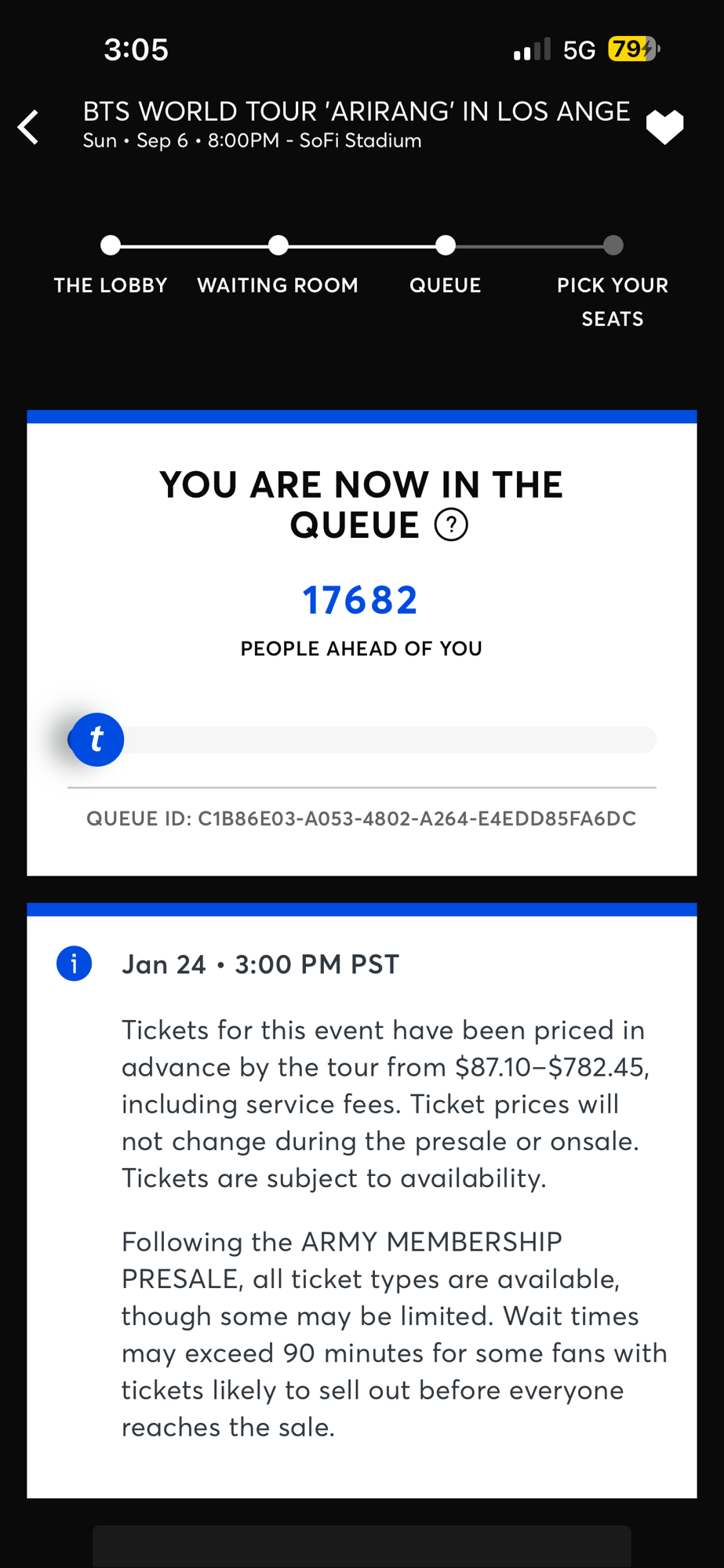
  • A Special kind of AHHHHHH

    Refresh, refresh, my fingers tap with manic, frenzied flair,
    Ticketmaster spins a loading wheel like it’s a juggler’s pins in air.

    Queue time: “More than an hour,” my soul begins to wilt,
    Meanwhile Yoongi just wants my rent and grocery money’s guilt.

    I type in the presale code like it’s a sacred spell,
    “Code invalid.” Suddenly I’m free-falling into ticket hell.

    I promised I’d be calm this time, just breathe, align my chi,
    But my laptop, phone, and work PC form a Wi‑Fi army.

    My boss walks by, I alt‑tab fast, pretending I’m on task,
    But she sees the purple wallpaper – no disguise can mask.

    The timer counts down ominous, my heart’s a beating drum,
    I swear I hear faint fan chants while my fingertips go numb.

    “Best Available” I click in fear, I dare not even peek,
    Section 800 nosebleed seats where clouds go twice a week.

    Dynamic pricing jumps again – my bank card quietly cries,
    Even J Hope would look at these fees and say, “Big Hit, why?”

    “Don’t refresh the page!” I chant like some deranged high priest,
    Then Chrome decides to auto‑update – my terror is unleashed.

    The captcha asks, “Are you a bot?” I’m sweating, shifting eyes,
    If I fail this test, a bot will claim my bias and my prize.

    “Select all traffic lights,” it says; I squint and second‑guess,
    At this point I’ll never cross a street, but sure, I’ll pass this test.

    The spinning circle stops at last; my fate is finally shown,
    “Sorry, another fan just bought those seats.” I howl and groan.

    I bargain with the universe, “I’ll hydrate and touch grass,”
    Just let me see them live one time and not from orbit class.

    Then somehow tickets appear in cart, my brain can’t comprehend,
    My hands are shaking so much hard I mis‑spell my own name’s end.

    I smash “Confirm” like Namjoon tripped and broke another chair,
    If this page crashes now, I’ll simply evaporate in air.

    “Order complete!” the screen declares, confetti in my head,
    I re‑read that one line 40 times before I go to bed.

    I’ve got my BTS show seats, anxiety now tamed.
    Until they drop more tour dates and I’m back, slightly more unhinged, yet proudly…
    logged in, purple‑clowned, and trained.