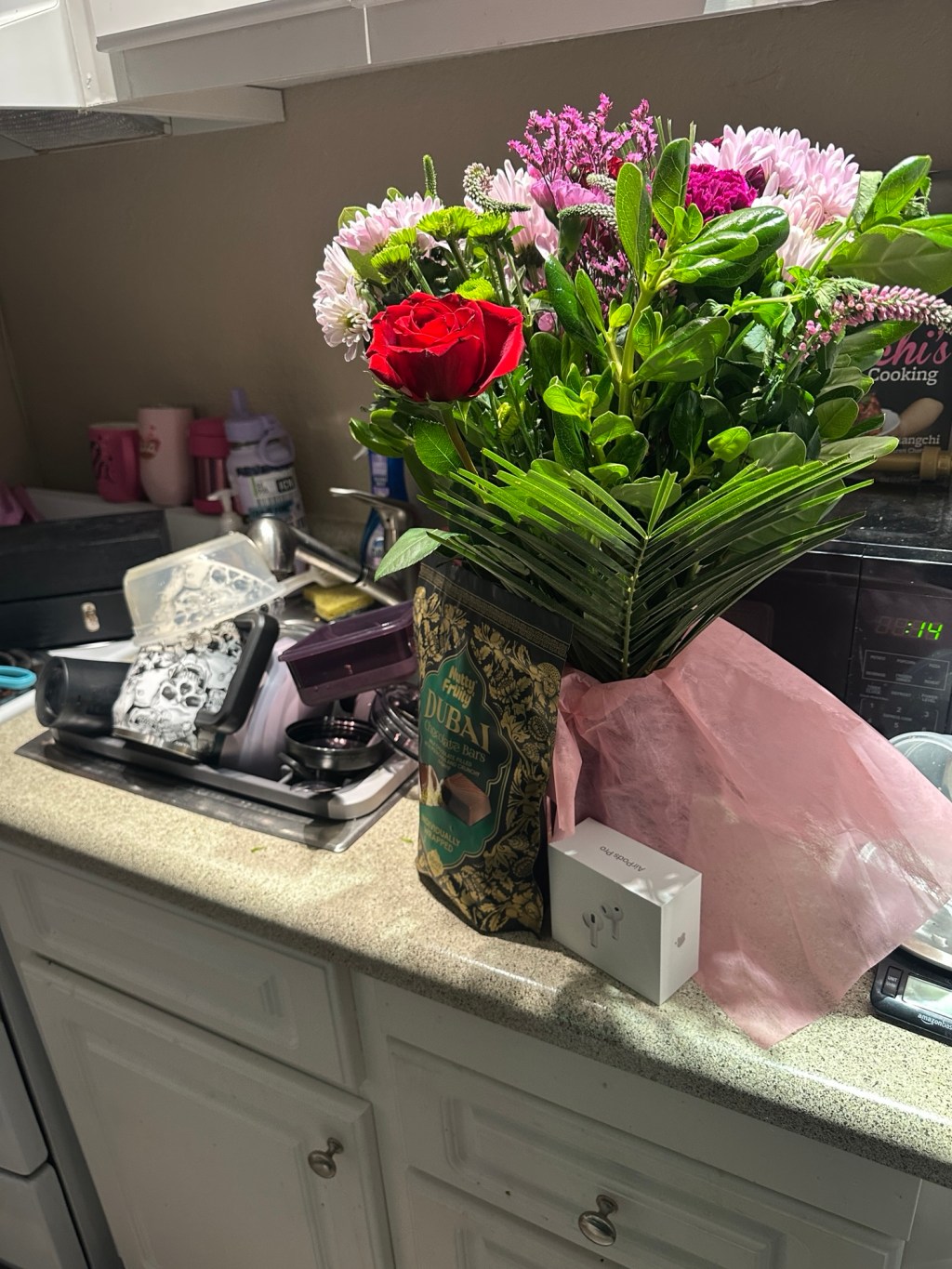
I am learning that kindness is not just in big, grand gestures. It’s in the quiet, steady presence of someone who lets you be soft. Someone who doesn’t punish you for your insecurities, but welcomes them. Someone who doesn’t get defensive when you say, “Hey, I’m feeling a little tender around this,” and instead replies with, “Okay, tell me more. I’m here.” Not in a performative sort of way, but just genuinely.
I am learning what it means to have a soft place to land. And also be that soft space for others.
For so long, my nervous system has been braced for impact—waiting for the sigh, the eye roll, the shutdown, the accusation, the “You’re too much.” I got used to swallowing my feelings to protect the connection. I thought that was normal. I thought *I* was the sole problem. It’s what I’ve always been told.
Before I ever had the language for “attachment wounds,” I just had patterns.
I told myself I was just “picky” or “unlucky” or “too intense,” after hearing such things told to myself but the truth was simpler and more painful: I was reenacting familiar hurt over and over again, calling it love.
I dated narcissists and congratulated myself for being strong enough to leave them. That became part of my identity: *I’m the one who sees through the bullshit. I’m the one who walks away*. It felt like power, but it was also a shield. If I could always be the one to leave, I never had to face how much I actually needed anyone.
Then I met an avoidant. This time, I didn’t leave first. I didn’t want to. I treated our issues as a big puzzle to solve, hoping that I could love him harder into believing how amazing he was. I did. I loved him so hard into believing he was good, so good that I became void. Unnecessary.
He pulled away, shut down, disappeared emotionally. And instead of walking, I chased. I twisted myself into knots trying to “fix” whatever was wrong with the relationship, trying to become easier, lighter, less needy. I watched myself begging for crumbs of connection and I hated it, but I couldn’t seem to stop. He began to resent me for feelings of wanting to fix HIM.
That heartbreak cracked something open.
It was the first time I really had to admit: *Maybe it’s not just about who I choose. I am still wounded, too*.
Now I’m realizing that real love doesn’t ask me to get smaller. Real love invites the whole of me to come sit down and stay awhile. Others inability to take me as a whole person was always a them problem. But I made it a me problem by absorbing their opinions of me over my own.
Later, I met a more secure man.
He didn’t love-bomb. He didn’t emotionally vanish. He wasn’t perfect, but he was consistent. He texted when he said he would. He listened. He apologized when he messed up. He gave me softness and stability I had never really trusted before.
And that’s when everything got loud.
In the presence of steadiness, all my own chaos floated to the surface.
I felt two completely opposite things at the same time:
– A desperate pull toward him: *Don’t leave, stay close, I need you*
– And an urge to run: *This is too much, he’ll hurt you, push him away before he sees too much*
Previously, I would get triggered by the smallest things. A delayed reply, a change of tone, a weird feeling in my body and suddenly I was spiraling. One part of me wanted to cling and demand reassurance. Another part wanted to shut down, go cold, pretend I didn’t care. I could feel both the anxious and avoidant parts of me wrestling for control.
For a while, I thought this meant I was “crazy” or “broken.”
Then I found the language for it: fearful avoidant.
Realizing I was a fearful avoidant was like someone turning the lights on in a room I’d been stumbling through for years. I could suddenly see why dating narcissists and dismissive avoidants always felt weirdly familiar. I could see how I both longed for closeness *and* feared it like fire. I could see why I’d swing between:
– “Please don’t leave, I’ll do anything to keep you”
– and “I don’t need anyone, I’m better off alone”
That realization hurt. It was humbling. It meant I couldn’t just blame everyone I’d ever dated. It meant my nervous system had been trying to protect me for a long time, in really messy ways.
It was “this is what happened to me, and this is how my system learned to survive.”
With this more secure man, I started doing something I hadn’t done before: I told the truth *in the moment*. Instead of delayed processing it.
Instead of exploding or shutting down, I would say:
– “Hey, my fearful avoidant side is flaring up right now.”
– “Part of me wants to run, and part of me wants to cling. I just want to name it instead of acting on it.”
– “I’m feeling triggered, but I know it’s old stuff. I need a little reassurance, and then I think I’ll be okay.”
Sometimes my voice would shake. Sometimes I’d say it awkwardly. Sometimes I wouldn’t get it “right.” But every time I named what was happening inside me instead of letting it drive the car in silence, something softened.
I started to see the pattern *while* I was in it.
I could feel the familiar panic rise and think, *Oh, hi. This is my attachment wound talking. This is my fearful avoidant part. I don’t have to obey it*. I could sit with the feeling instead of automatically acting it out.
That’s what “getting more secure” looks like for me right now. Not perfection, not never being triggered, but:
– Catching the wave sooner
– Speaking to what’s happening instead of hiding it
– Letting safe people see me when I’m scared, instead of punishing them or abandoning myself
I used to think “secure” meant never feeling scared or jealous or needy.
Now I’m realizing “secure” is often just: *I can feel all of that, and still stay. I can feel all of that, and not tear everything down.*
I am still learning what it means to have a soft place to land, especially inside myself.
To recognize, *Oh, this tightness in my chest is old. This urge to run is old. This desperation is old. These are attachment wounds, not proof that I’m unlovable*.
And I’m learning that when I can see my fearful avoidant parts clearly, I don’t have to live from them. I can listen, soothe, and choose differently. I can keep my heart open, even when it’s scared. I can let love in, even when every old survival strategy is screaming at me to slam the door.
Being Allowed to Be Insecure
There are moments when I notice myself feeling insecure. Old stories start to whisper: You’re a burden. You’re careless. You’re going to mess this up.
In the past, naming those feelings out loud felt dangerous. Saying, “Hey, I’m feeling insecure right now,” often led to the other person getting defensive, or taking it personally, or making it about their own hurt. I learned to hold everything inside, because my feelings became evidence against me. Or evidence a partner would use against me too.
But now, when I say I’m feeling insecure, I’m not met with judgment. I’m met with curiosity. I’m allowed to explain myself. I’m allowed to slow down and trace where the feeling is coming from. And he doesn’t collapse into shame or lash out in defense. He stays steady. He stays secure. He stays with me.
He lets me feel what I feel without making it about him.
That, I’m realizing, is a form of kindness I didn’t know I was allowed to have.
The Headphones Story
Today, he took me out to go grocery shopping. It was such a normal, simple thing—just the two of us wandering aisles, picking out food, existing side by side.
Somewhere along the way, we realized my headphones were missing. I had the case, but no headphones. I use them to cut down on sensory overwhelm, to make the world a little quieter and more manageable. And these weren’t just any headphones—he had bought them for me as a gift.
At first, I didn’t panic. We kept moving. But when we got back to my place, I started looking for them properly. I checked all the usual spots. No luck. I checked the not-so-usual spots. Still nothing.
And then it hit me.
Not just the loss of the headphones, but the wave underneath it: shame.
Shame that I had lost something important.
Shame that I had lost something he had bought me.
Shame that this is “a thing” for me—that I misplace, I forget, I lose track.
Shame that I might be “too much work.”
I looked everywhere. They were truly gone.
And I burst into tears.
I wasn’t just crying about the headphones. I was crying about every time I had been made to feel careless, irresponsible, or ungrateful. I was crying about the old script in my head that says, See? You ruin nice things. People are going to get tired of this.
He didn’t rush to fix my feelings.
He didn’t tell me I was overreacting.
He didn’t get irritated or make a joke at my expense.
He let me cry.
He let the moment be as big as it felt in my body. Then, gently, he asked, “Do you need a hug?”
I said yes.
He wrapped his arms around me and held me while I cried. Then he did something that surprised me even more: he met my shame with understanding.
He reminded me that this kind of thing is really common with ADHD: losing items, misplacing things, forgetting where you set something down. It wasn’t because I didn’t care. It wasn’t because I was ungrateful. It was because my brain is wired in a way that makes this more likely to happen.
He told me he understood. He pointed out that actually, I’d been doing much better about keeping track of my stuff lately. He helped me see progress where I was only seeing failure.
And then he said, “Hold on.”
Click, click.
He ordered me a new pair on DoorDash.
I cried harder…but this time, from relief. From being seen. From being cared for so well.
He said he knows how important they are for me, and that replacing them was truly the least he could do. Not in a dismissive way. In a I get it, and I’ve got you way.
It wasn’t about the money.
It was about the message:
“You’re not a burden. You’re worth the effort. I care about what helps you feel safe.”
When Care Doesn’t Take It Personally
What struck me most was what he didn’t do.
He didn’t take my tears as an accusation.
He didn’t interpret my overwhelm as an attack.
He didn’t make it about his gift or his sacrifice or how I “should take better care of things.” Like I had always heard growing up or in past relationships.
He stayed separate from my shame. Close enough to hold me, but not so entangled that he made my feelings about him. He didn’t try to rescue his ego. He tried to support my heart.
He let me feel all of it: the panic, the shame, the grief, the tenderness. He stayed calm and grounded while I wasn’t. He reminded me that my emotional world is not a problem to be solved, but a reality to be held.
This is kindness.
Not the kind that says, “Don’t cry, it’s not a big deal,” but the kind that says, “If it’s a big deal to you, it’s a big deal to me.”
A Community That Lets You Stay Soft
I am starting to understand that healing is not something you do all alone in a dark room with a stack of self-help books. Healing is also having people who are safe to fall apart around. People who can see you in your mess and not flinch.
The kind of community I want and am slowly learning to accept is one where:
- I’m allowed to say, “I feel insecure,” and no one punishes me for it.
- My ADHD traits are met with understanding instead of criticism.
- Losing something doesn’t make me “bad,” it just makes me human.
- My emotions are welcome guests, not intruders to be kicked out.
- The people around me stay secure, even when I don’t feel secure myself.
A soft landing doesn’t mean nothing bad ever happens. It means that when it does, you don’t have to brace for impact alone. And if I do have to do it alone, I won’t break.
Learning to Receive This Kind of Love
Receiving this kind of kindness is its own practice.
Part of me still wants to say, “You didn’t have to do that,” or “I’m so sorry, I promise I’ll be better,” or “I’ll pay you back.” Part of me wants to scramble to earn it.
But another part of me is slowly learning to just…receive.
To let the hug land.
To let the understanding land.
To let the new headphones land – not as a sign of my failure, but as a symbol of being cared for.
I’m learning that I don’t have to be perfect to be loved well.
I don’t have to never lose anything.
I don’t have to never cry over “small things.”
I don’t have to hide my overwhelm or my shame to keep my connection to someone.
I’m allowed to be soft.
And for maybe the first time, I’m starting to believe that I deserve a life where my softness is not a liability, but something precious that the right people will want to protect.


Leave a Reply