Being a raver and being neurodivergent can both feel like living with your brain’s volume turned all the way up. Bright lights, loud music, social energy, emotions, sensory overload… and then on top of that, ADHD, autism, anxiety, or other neurodivergent wiring that already runs hot.
A dedicated crafting space isn’t just a cute aesthetic add‑on to this lifestyle. For many neurodivergent ravers, it’s actually a regulation tool, a creative sanctuary, and a way to keep the festival magic alive in a way that feels grounding and sustainable.
Let’s dive into why this matters so much—and how you can build a space that truly supports your brain, your body, and your rave soul.
Why It Helps the ND Raver
1. Slowing Down a Fast Brain
Neurodivergent brains often run like 20 tabs open at once:
- Thoughts jumping in timelines, conversations, worries, ideas
- Sensory memories from shows still buzzing in your body
- Background noise that never really shuts off
Crafting can act like a gentle “brake pedal” for that mental chaos.
When you:
- Thread beads onto string
- Layer UV paint on a canvas
- Sew or glue fabric pieces together
- Design kandi or iron or organize perler patterns and beads
…your brain is invited to focus on one thing at a time. The repetitive motions and tactile feedback can be almost meditative. It’s not “doing nothing” (which can be very hard for neurodivergent minds), but it’s slow doing—a calmer pace that still feels productive and fun.
2. Resting by Creating (Not Just “Doing Nothing”)
For a lot of neurodivergent folks, “rest” doesn’t always look like lying on the couch in silence. In fact, that can feel:
- Boring
- Uncomfortable
- Overwhelming (because your brain gets louder when the environment gets quieter)
Crafting gives you:
- Active rest – Your body and nervous system slow down, but your brain still gets stimulation in a gentle, focused way.
- Emotional processing – You can work through post-rave blues, social exhaustion, or big feelings through colors, patterns, and making something with your hands.
- Soft joy – Not the explosive euphoria of a festival, but that cozy satisfaction of “I made this.”
It’s the kind of rest that doesn’t require you to shut your brain off—just to redirect it into something soothing.
3. Organization as a Form of Regulation
Neurodivergent brains often crave structure even if executive dysfunction makes it hard to keep. A crafting space can offer gentle, visual organization that feels:
- Calming
- Predictable
- Actually exciting (because everything is related to something you love: raves, art, self-expression)
Having:
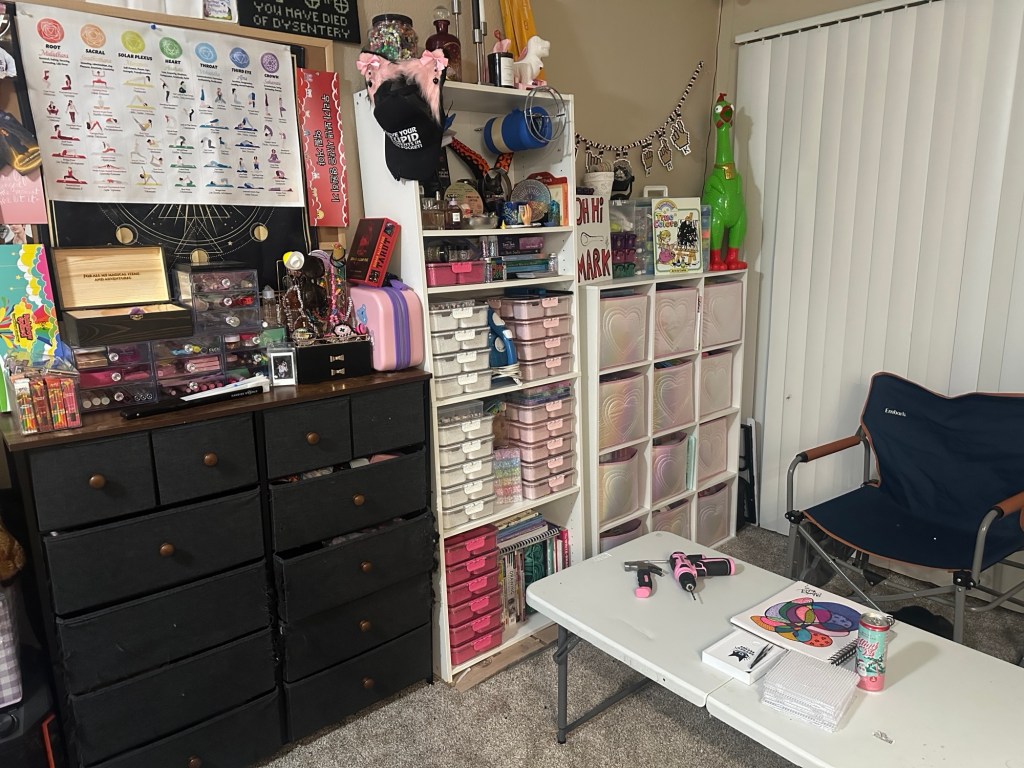
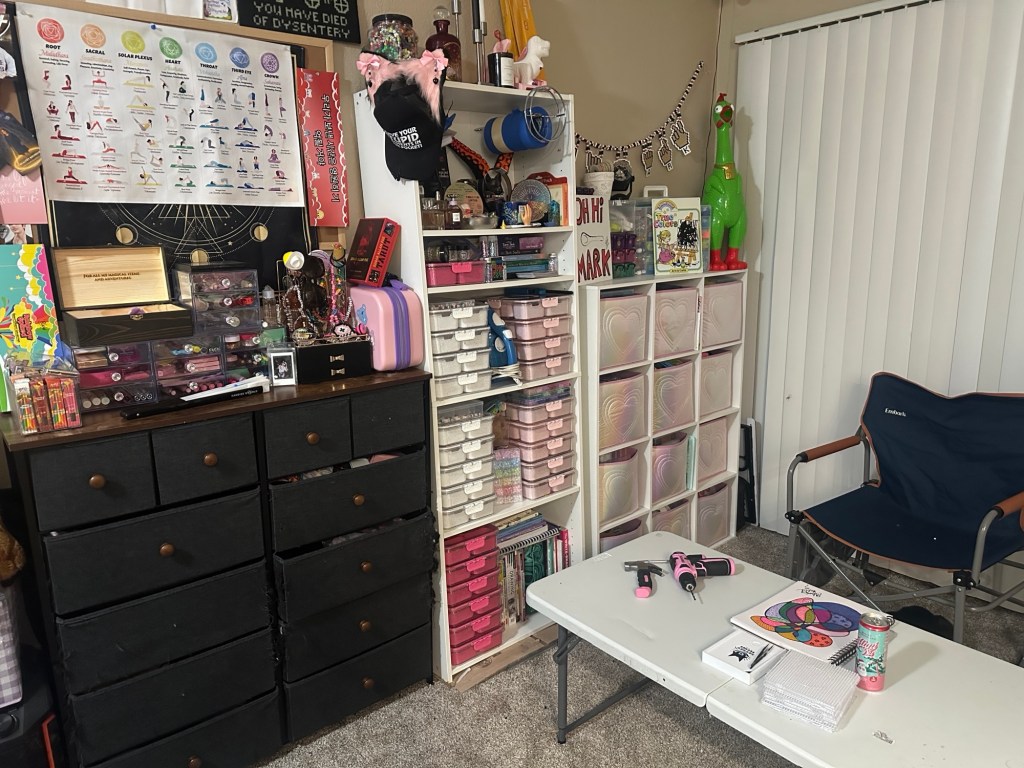
- Beads in clear containers
- Fabric folded by color
- Tools always in the same tray
- Half-finished projects visible but contained
…can create a sense of external order that helps regulate your internal chaos.
It’s not about perfection or Pinterest‑level aesthetics. It’s about:
- Knowing where things are
- Reducing decision fatigue
- Preventing overstimulation from random clutter
- Creating a ritual: “I sit here, I pick up this box, I know what happens next”
- I also notice how much less I panic when I can find things easily. I’m late a lot less often, I feel less pre-show overwhelm, and I enjoy my time a lot more when getting ready.
4. A Safe, Soft, Controlled Version of the Rave World
Raves are:
- Loud
- Bright
- Crowded
- Unpredictable
Your crafting corner can be:
- Quiet or softly musical
- Dim with fairy lights or cozy lamps
- Solo or just with one trusted friend
- Predictable and under your control
It’s like having a mini rave universe you can access anytime—without the overwhelm. You still get:
- Neon colors
- Glitter
- PLUR energy through making kandi or outfits
- Creative self-expression
…but in a way that’s gentler on your nervous system and schedule.
5. Identity, Autonomy, and Pride
When you’re neurodivergent, the world often makes you feel:
- “Too much”
- “Not enough”
- Out of sync
Crafting space flips that script. It becomes:
- A place where your hyperfocus is an asset
- A place where your sensory seeking (textures, colors, sparkles) is celebrated
- A place where your weird, niche, specific interests are the main event
Designing outfits, decor, or kandi that scream you can help root your identity:
“This is my brain, my art, my rave gear, my way.”
What Makes a Crafting Space Neurodivergent-Friendly?
You don’t need a full studio or a fancy room. A neurodivergent-friendly crafting space is more about function and feeling than size.
1. A Clear “Zone” Just for Creating
Your brain benefits from clear boundaries:
- “This is where I craft.”
- “This is where I scroll.”
- “This is where I sleep.”
Your crafting space could be:
- A dedicated desk
- A fold-out table
- A corner of your room with a cart
- Even a single shelf + a lap desk
What matters is that your brain learns:
“When I sit here, I create.”
2. Visual but Not Overwhelming Organization
Neurodivergent brains tend to love:
- Visual cues (seeing what exists, not hidden in opaque boxes)
- Color-coding
- Clear categories
But at the same time, visual clutter can be overstimulating. Aim for something in the middle:
- Use clear bins or jars for:
- Beads
- Charms
- Glow sticks
- Stickers
- Label them simply:
- “Beads – Warm Colors”
- “Charms – Hearts & Stars”
- “Fabric Scraps – UV”
- Use trays or small baskets to group:
- All kandi-making tools
- All sewing supplies
- All paints/brushes
Think: organized chaos that still feels calm.
3. Sensory Comfort: Make It Gentle on Your System
Crafting is easier when your nervous system feels safe.
Consider:
- Lighting
- Soft warm lamps instead of harsh overhead lights
- LED strips, fairy lights, or a small color-changing bulb
- Sound
- Low-volume mixes, chillstep, lofi, or ambient psytrance. Personally, I really like Drum and Bass for just about any project. But I’ve been feelin a lot of Rezz for my organization recently.
- White noise if music is too distracting
- Noise-cancelling headphones for really focused moments
- Seating
- A chair with back support
- A pillow for your lower back
- Or a floor setup with cushions if that’s more your vibe. I personally prefer this, depending on the craft I’m creating.
- Texture
- A soft blanket on the chair
- A fidget toy on the desk, or in my case, a container dedicated to stim toys.
- A smooth desk mat for your hands to rest on
Your crafting space should be sensory-safe first, aesthetic second (but you can absolutely have both).
4. Clear Surfaces With “Zones”
Neurodivergent brains can get overwhelmed when every single thing is visible at once. Try creating mini-zones on your workspace:
- Active Project Zone
- Only what you’re working on right now
- Tools Zone
- Scissors, pliers, needles, tape, glue, etc.
- Supplies Zone
- Beads, fabric, paints, charms, etc.
If your space is small:
- Use a tray or mat to define the active project area.
- When you’re done for the day, you can move the tray aside and your surface is “cleared” without having to put away every single bead.
5. A Simple Reset Ritual
Executive dysfunction makes “cleaning up” feel like a boss battle. Instead of aiming for perfection, design a minimal reset ritual, for example:
- Put all tools back into one container.
- Put all loose supplies into one “catch-all” bin if you’re tired.
- Clear the main workspace so tomorrow’s you won’t get overwhelmed.
- Take one photo of your in-progress project so you remember what you were doing.
Even that small reset keeps the space welcoming instead of guilt-inducing.
What You Might Want in Your Raver Crafting Space
You definitely don’t need all of this—this is more of a menu than a checklist. Start with whatever matches your energy, budget, and interests.
Core Basics
- Work surface
- Desk, table, or sturdy lap desk
- Comfortable chair or floor setup
- Good lighting
- Desk lamp or small LED lamp
- Storage
- A rolling cart
- Stackable bins
- Clear jars/containers with lids
- Basic tools
- Scissors (fabric and/or craft scissors)
- Small pliers (for jewelry/kandi)
- Ruler or measuring tape
- Glue gun or strong craft glue
- Tape
Raver-Specific Craft Supplies
Depending on what you love to make:
For Kandi & Jewelry
- Pony beads (neon, glow-in-the-dark, UV-reactive)
- Alphabet beads
- Charms (rave themes, hearts, stars, smileys, mushrooms, aliens, etc.)
- Elastic cord or stretchy string
- Clasps, jump rings (if you like more structured jewelry)
- Small organizers with divided sections. I’ve been obsessed with the store Five Below. Finding craft containers for 5-7 dollars has been a blessing for me.
For Outfits & Accessories
- Fabric (holographic, mesh, UV, metallic, faux fur)
- Elastic bands & waistbands
- Sewing kit:
- Needles
- Thread
- Pins or clips
- Fabric glue (if you’re not sewing yet)
- Safety pins
- Velcro strips
- Rhinestones, studs, patches
- Iron-on letters or designs
- Old clothes to upcycle (tank tops, fishnets, leggings, etc.)
For Visual Art & Decor
- Acrylic paints (especially neon/UV-reactive)
- Paintbrushes
- Canvas panels or art paper
- Markers, paint pens, metallic pens
- Stickers, washi tape, stencils
- Spray paint (if you have a safe/ventilated place)
- Cardstock for signs, tags, or mini posters
For Fans, Totems, and Props
- Folding fans (blank) to paint/decorate
- Cardboard or foam board for totems
- Duct tape, gaffer tape, or strong tape
- PVC pipe or wooden sticks for handles
- Zip ties
- Printed images, laminated if possible
- Glitter (preferably biodegradable if you can)
Sensory & Regulation Items
- Fidget toys (rings, cubes, squishies, tangles)
- Essential oil roller or scented candle (if that helps you relax)
- Small weighted item (like a weighted lap pad) if pressure calms you
- Soft blanket or hoodie near your chair
How to Actually Use the Space (Without Overwhelming Yourself)
1. Start with Micro-Sessions
If starting feels hard, tell yourself:
- “I’m just going to sit here for 5 minutes.”
- “I’ll only sort beads by color for one song.”
- “I’ll only add 5 beads to this bracelet.”
Once you’re there, your brain may slip into hyperfocus naturally—but the pressure is low.
2. One Project in the Spotlight
Try to have one main project visible in your active zone, even if you have a hundred ideas. Store other projects:
- In labeled bags
- In separate boxes
- On a shelf with a post-it note describing what you were planning
This reduces the “I want to do everything and so I do nothing” feeling.
3. Use Raves as Your Creative Fuel, Not Just a Goal
Instead of only crafting for a specific event (which can cause time-pressure and stress), let the rave world be:
- Your inspiration
- Your theme
- Your emotional language
You can create:
- Kandi you’ll give away “someday”
- Art inspired by past shows
- Outfit pieces with no deadline
- Decor just for your room that makes it feel like a safe mini-festival
This way your crafting space isn’t just a prep station—it’s a living, breathing part of your rave identity.
4. Build Rituals Around It
Neurodivergent brains often love ritual and pattern once it’s established. You could:
- Light the same candle or switch on a specific LED color when you start.
- Put on a specific playlist: “crafting mode.”
- Start by doing the same small thing every time, like:
- Sorting a few beads
- Checking your project list
- Taking out your fidget toy for a minute
Your brain learns:
“These signals mean: we’re safe, we’re crafting, we can slow down.”
Clearing the Space Without Burning Out
“Cleaning” can be a loaded word, especially with executive dysfunction. Instead, think of it as resetting your altar.
Try this simple end-of-session routine:
- Stop the mess from spreading
- Put all beads back into some container (even if not perfectly sorted).
- Close glue, paints, and marker caps.
- Save your brain state
- Take a quick photo of your project and maybe jot a one-sentence note:
- “Next: add letters to second row.”
- Clear the core surface
- Push everything to a side tray or bin if you’re exhausted.
- Wipe crumbs/glitter only if you have the energy; if not, it can wait.
- Do one kind thing for future you
- Leave your favorite tool or supply nicely placed where you’ll see it.
- That little “invitation” makes it easier to come back.
Shae’s Last Thoughts:
For a neurodivergent raver, a crafting space isn’t a luxury hobby zone. It’s:
- A regulation station for a buzzing brain 🧠
- A sensory-safe pocket of the rave universe ✨
- A way to rest without going idle
- A ritual space where you’re allowed to be fully, loudly, colorfully yourself
You deserve a corner of the world that exists just to support your creativity and your nervous system—something that’s not about being productive for others, but about feeling good in your own body and mind.
 Swipe Left On Perfection
Leave a comment