The year unravels, thread by thread, pins but thankfully no deadlines in my head. Chalk dust on my jeans, Uv light in my eyes, trying to juggle overtime, earthquakes, and unpleasant skies.
I’ve baked resin under kitchen lamps, tiny galaxies in silicone, or wood held by clamps, perlers pixel by pixel, each square a vow to make my own patterns from here on out.
I’ve stitched old shirts into newer lives, tie-dyed storms and marbled tides, pressed beads from scraps with stubborn hands, sometimes the ideas don’t work out, but sometimes the execution lands.
But balance is harder than cutting on grain, than threading a needle on a moving train. The weight of caretaking others and minimum pay sat in my chest like unfired clay.
I bent myself into useful shapes, forgot my breath, my room, my space. Work in the morning, more work at night, play just a rumor at the edge of my sight.
Still, somewhere between C4 and collapse, between resin cures and folded laps, a quiet voice, my internal voice, kept tapping the glass: “You can’t serve well from an empty cast.”
Now the year thins out like worn-out seams, and I’m finally stepping into my own theme. Project S. + UCSF on the name badge at my chest and a promise to myself underneath it: health comes first, then the rest. From Here on Out.
Not as slogan, not as line, but a boundary drawn in permanent shine: My body is not a side project or chore, it’s the frame of the life I’ve been crafting for.
I look for nothing else. To manage my schedule, between work, fitness, and crafting. Meal planning, 3 day weekend and a lot of planned drafting.
So I’ll load the barbell like I load the clay in the oven , patient with progress, steady and still. Muscle and mindset, rep by rep, building a shelter inside my breath.
Clients and friends, I’ll meet you there, where the air is deeper and the load is fair, where we chase strength, not shrinking or grow cold, where aging is power and not just “getting old.”
And when the day’s sweat has finally dried, I’ll turn back to color, to needles, to dye. To clay that remembers every press of my thumb, to fabric that sings when the seams come undone.
I’ll pour resin over the stories we keep, trap tiny galaxies, secrets, and grief. I’ll fuse beads into patterns that no one has named, a small act of courage disguised as a chain.
Upcycled sleeves, a new hemline’s start, I’ll stitch in the margin: this is my art. Not perfect, not polished, not factory clean, but honest and earned and stubbornly seen.
Work in its place, rest in its hour, movement as ritual, craft as flower. I think I’ve finally traced the design: health as the warp, creation the weft of my time.
When this year closes like a well-worn door, I’ll leave what drained me on the old, cracked floor. Step forward in sneakers, ink on my skin, a trainer, a maker, at home in my limbs.
Clay on my hands, sweat on my brow, no longer asking for balance somehow. I’m choosing the pattern, I’m cutting it true— this life is a garment I’m tailoring new.
Better but not quite yet done. I’ve come so far though.
Being a raver and being neurodivergent can both feel like living with your brain’s volume turned all the way up. Bright lights, loud music, social energy, emotions, sensory overload… and then on top of that, ADHD, autism, anxiety, or other neurodivergent wiring that already runs hot.
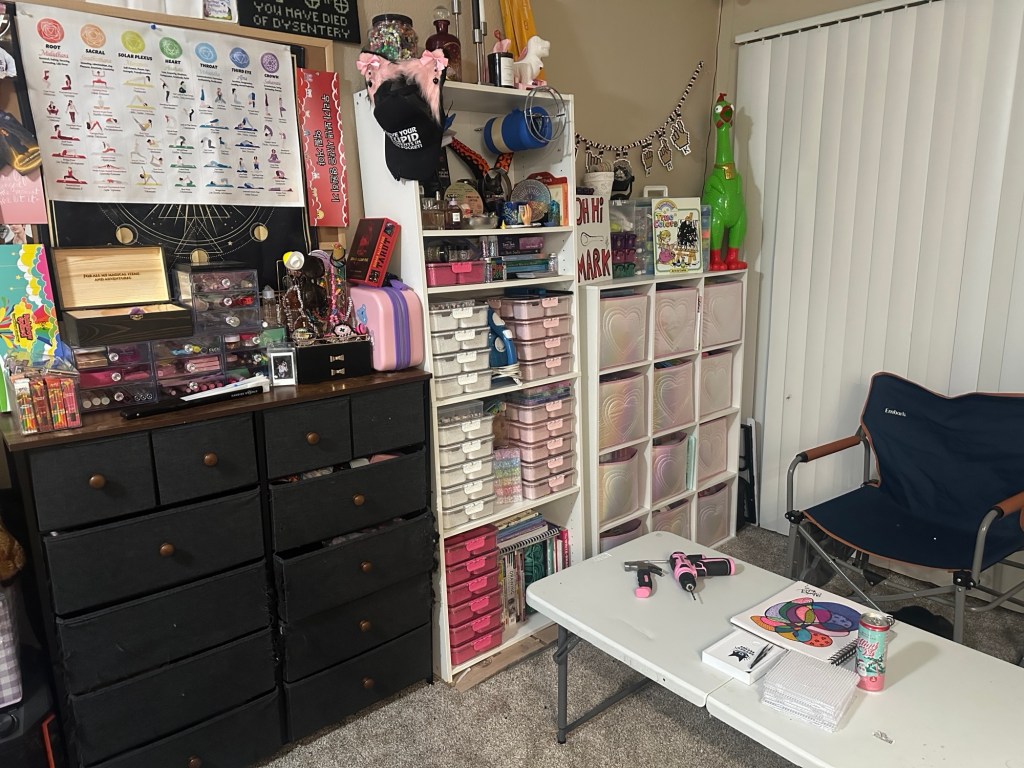
A dedicated crafting space isn’t just a cute aesthetic add‑on to this lifestyle. For many neurodivergent ravers, it’s actually a regulation tool, a creative sanctuary, and a way to keep the festival magic alive in a way that feels grounding and sustainable.
Let’s dive into why this matters so much—and how you can build a space that truly supports your brain, your body, and your rave soul.
Why It Helps the ND Raver
1. Slowing Down a Fast Brain
Neurodivergent brains often run like 20 tabs open at once:
Thoughts jumping in timelines, conversations, worries, ideas
Sensory memories from shows still buzzing in your body
Background noise that never really shuts off
Crafting can act like a gentle “brake pedal” for that mental chaos.
When you:
Thread beads onto string
Layer UV paint on a canvas
Sew or glue fabric pieces together
Design kandi or iron or organize perler patterns and beads
…your brain is invited to focus on one thing at a time. The repetitive motions and tactile feedback can be almost meditative. It’s not “doing nothing” (which can be very hard for neurodivergent minds), but it’s slow doing—a calmer pace that still feels productive and fun.
2. Resting by Creating (Not Just “Doing Nothing”)
For a lot of neurodivergent folks, “rest” doesn’t always look like lying on the couch in silence. In fact, that can feel:
Boring
Uncomfortable
Overwhelming (because your brain gets louder when the environment gets quieter)
Crafting gives you:
Active rest – Your body and nervous system slow down, but your brain still gets stimulation in a gentle, focused way.
Emotional processing – You can work through post-rave blues, social exhaustion, or big feelings through colors, patterns, and making something with your hands.
Soft joy – Not the explosive euphoria of a festival, but that cozy satisfaction of “I made this.”
It’s the kind of rest that doesn’t require you to shut your brain off—just to redirect it into something soothing.
3. Organization as a Form of Regulation
Neurodivergent brains often crave structure even if executive dysfunction makes it hard to keep. A crafting space can offer gentle, visual organization that feels:
Calming
Predictable
Actually exciting (because everything is related to something you love: raves, art, self-expression)
Having:
Beads in clear containers
Fabric folded by color
Tools always in the same tray
Half-finished projects visible but contained
…can create a sense of external order that helps regulate your internal chaos.
It’s not about perfection or Pinterest‑level aesthetics. It’s about:
Knowing where things are
Reducing decision fatigue
Preventing overstimulation from random clutter
Creating a ritual: “I sit here, I pick up this box, I know what happens next”
I also notice how much less I panic when I can find things easily. I’m late a lot less often, I feel less pre-show overwhelm, and I enjoy my time a lot more when getting ready.
4. A Safe, Soft, Controlled Version of the Rave World
Raves are:
Loud
Bright
Crowded
Unpredictable
Your crafting corner can be:
Quiet or softly musical
Dim with fairy lights or cozy lamps
Solo or just with one trusted friend
Predictable and under your control
It’s like having a mini rave universe you can access anytime—without the overwhelm. You still get:
Neon colors
Glitter
PLUR energy through making kandi or outfits
Creative self-expression
…but in a way that’s gentler on your nervous system and schedule.
5. Identity, Autonomy, and Pride
When you’re neurodivergent, the world often makes you feel:
“Too much”
“Not enough”
Out of sync
Crafting space flips that script. It becomes:
A place where your hyperfocus is an asset
A place where your sensory seeking (textures, colors, sparkles) is celebrated
A place where your weird, niche, specific interests are the main event
Designing outfits, decor, or kandi that scream you can help root your identity:
“This is my brain, my art, my rave gear, my way.”
What Makes a Crafting Space Neurodivergent-Friendly?
You don’t need a full studio or a fancy room. A neurodivergent-friendly crafting space is more about function and feeling than size.
1. A Clear “Zone” Just for Creating
Your brain benefits from clear boundaries:
“This is where I craft.”
“This is where I scroll.”
“This is where I sleep.”
Your crafting space could be:
A dedicated desk
A fold-out table
A corner of your room with a cart
Even a single shelf + a lap desk
What matters is that your brain learns:
“When I sit here, I create.”
2. Visual but Not Overwhelming Organization
Neurodivergent brains tend to love:
Visual cues (seeing what exists, not hidden in opaque boxes)
Color-coding
Clear categories
But at the same time, visual clutter can be overstimulating. Aim for something in the middle:
Use clear bins or jars for:
Beads
Charms
Glow sticks
Stickers
Label them simply:
“Beads – Warm Colors”
“Charms – Hearts & Stars”
“Fabric Scraps – UV”
Use trays or small baskets to group:
All kandi-making tools
All sewing supplies
All paints/brushes
Think: organized chaos that still feels calm.
3. Sensory Comfort: Make It Gentle on Your System
Crafting is easier when your nervous system feels safe.
Consider:
Lighting
Soft warm lamps instead of harsh overhead lights
LED strips, fairy lights, or a small color-changing bulb
Sound
Low-volume mixes, chillstep, lofi, or ambient psytrance. Personally, I really like Drum and Bass for just about any project. But I’ve been feelin a lot of Rezz for my organization recently.
White noise if music is too distracting
Noise-cancelling headphones for really focused moments
Seating
A chair with back support
A pillow for your lower back
Or a floor setup with cushions if that’s more your vibe. I personally prefer this, depending on the craft I’m creating.
Texture
A soft blanket on the chair
A fidget toy on the desk, or in my case, a container dedicated to stim toys.
A smooth desk mat for your hands to rest on
Your crafting space should be sensory-safe first, aesthetic second (but you can absolutely have both).
4. Clear Surfaces With “Zones”
Neurodivergent brains can get overwhelmed when every single thing is visible at once. Try creating mini-zones on your workspace:
Active Project Zone
Only what you’re working on right now
Tools Zone
Scissors, pliers, needles, tape, glue, etc.
Supplies Zone
Beads, fabric, paints, charms, etc.
If your space is small:
Use a tray or mat to define the active project area.
When you’re done for the day, you can move the tray aside and your surface is “cleared” without having to put away every single bead.
5. A Simple Reset Ritual
Executive dysfunction makes “cleaning up” feel like a boss battle. Instead of aiming for perfection, design a minimal reset ritual, for example:
Put all tools back into one container.
Put all loose supplies into one “catch-all” bin if you’re tired.
Clear the main workspace so tomorrow’s you won’t get overwhelmed.
Take one photo of your in-progress project so you remember what you were doing.
Even that small reset keeps the space welcoming instead of guilt-inducing.
What You Might Want in Your Raver Crafting Space
You definitely don’t need all of this—this is more of a menu than a checklist. Start with whatever matches your energy, budget, and interests.
Clasps, jump rings (if you like more structured jewelry)
Small organizers with divided sections. I’ve been obsessed with the store Five Below. Finding craft containers for 5-7 dollars has been a blessing for me.
Old clothes to upcycle (tank tops, fishnets, leggings, etc.)
For Visual Art & Decor
Acrylic paints (especially neon/UV-reactive)
Paintbrushes
Canvas panels or art paper
Markers, paint pens, metallic pens
Stickers, washi tape, stencils
Spray paint (if you have a safe/ventilated place)
Cardstock for signs, tags, or mini posters
For Fans, Totems, and Props
Folding fans (blank) to paint/decorate
Cardboard or foam board for totems
Duct tape, gaffer tape, or strong tape
PVC pipe or wooden sticks for handles
Zip ties
Printed images, laminated if possible
Glitter (preferably biodegradable if you can)
Sensory & Regulation Items
Fidget toys (rings, cubes, squishies, tangles)
Essential oil roller or scented candle (if that helps you relax)
Small weighted item (like a weighted lap pad) if pressure calms you
Soft blanket or hoodie near your chair
How to Actually Use the Space (Without Overwhelming Yourself)
1. Start with Micro-Sessions
If starting feels hard, tell yourself:
“I’m just going to sit here for 5 minutes.”
“I’ll only sort beads by color for one song.”
“I’ll only add 5 beads to this bracelet.”
Once you’re there, your brain may slip into hyperfocus naturally—but the pressure is low.
2. One Project in the Spotlight
Try to have one main project visible in your active zone, even if you have a hundred ideas. Store other projects:
In labeled bags
In separate boxes
On a shelf with a post-it note describing what you were planning
This reduces the “I want to do everything and so I do nothing” feeling.
3. Use Raves as Your Creative Fuel, Not Just a Goal
Instead of only crafting for a specific event (which can cause time-pressure and stress), let the rave world be:
Your inspiration
Your theme
Your emotional language
You can create:
Kandi you’ll give away “someday”
Art inspired by past shows
Outfit pieces with no deadline
Decor just for your room that makes it feel like a safe mini-festival
This way your crafting space isn’t just a prep station—it’s a living, breathing part of your rave identity.
4. Build Rituals Around It
Neurodivergent brains often love ritual and pattern once it’s established. You could:
Light the same candle or switch on a specific LED color when you start.
Put on a specific playlist: “crafting mode.”
Start by doing the same small thing every time, like:
Sorting a few beads
Checking your project list
Taking out your fidget toy for a minute
Your brain learns:
“These signals mean: we’re safe, we’re crafting, we can slow down.”
Clearing the Space Without Burning Out
“Cleaning” can be a loaded word, especially with executive dysfunction. Instead, think of it as resetting your altar.
Try this simple end-of-session routine:
Stop the mess from spreading
Put all beads back into some container (even if not perfectly sorted).
Close glue, paints, and marker caps.
Save your brain state
Take a quick photo of your project and maybe jot a one-sentence note:
“Next: add letters to second row.”
Clear the core surface
Push everything to a side tray or bin if you’re exhausted.
Wipe crumbs/glitter only if you have the energy; if not, it can wait.
Do one kind thing for future you
Leave your favorite tool or supply nicely placed where you’ll see it.
That little “invitation” makes it easier to come back.
Shae’s Last Thoughts:
For a neurodivergent raver, a crafting space isn’t a luxury hobby zone. It’s:
A regulation station for a buzzing brain 🧠
A sensory-safe pocket of the rave universe ✨
A way to rest without going idle
A ritual space where you’re allowed to be fully, loudly, colorfully yourself
You deserve a corner of the world that exists just to support your creativity and your nervous system—something that’s not about being productive for others, but about feeling good in your own body and mind.
I learned to meet myself in the mirror without flinching at the way I glow— all angles, all sudden weather. I am awkward, and I am kind. I am the sum of my sparks, and I carry them now firmly.
Hyperfocus is my lighthouse: its beam cuts a path through fog and doubt. I aim it with care, swivel it toward what matters, and when the light grows too bright, I shade it— timers, breaks, a friend nearby to body-double til dawn.
Sensory truth is my compass: I read the texture of rooms, hear footsteps in the walls. Soft fabrics, quiet corners, headphones like harbors. I step outside when storms rise in fluorescent seas, and I tell you—it’s not you, it’s the volume of the tide.
My need for routine is a trellis I built myself, where restless vines can learn a gentle climb. Lists as constellations, alarms as small moons; I give minutes seatbelts, let tasks arrive in single syllables, start with two minutes, then another, then a breath.
Stimming is my wind-song: fingers tapping, a pebble turning, shoulders loosening. I balance the inner weather with rhythm and motion, and I will name it aloud, so you know it’s comfort, not distance— a bridge I walk back across to meet your eyes.
Monotropism is a river that runs deep and clear. When I love, I love with underwater clarity. I choose when to enter, when to surface, teach curiosity to blink in daylight, coax transitions like shy birds from hedges.
Directness is my honest stream. Words come true-blue, like sky after rain. I practice pause and softness: “Is this a good time?” “May I speak plainly?” Consent is the warm frame around my glass.
Time can dissolve like sugar in tea— so I color it, box it, name it: morning gold, afternoon amber, evening slate. I put tomorrow in a backpack tonight, leave it by the door where memory can touch it.
When rejection feels like thunder in a teacup, I steady the saucer with breath and small proof: ask for clarity, collect kind notes, remember that silence often means busy, not broken. I let tenderness teach me gentleness with myself.
Executive mountains are real, but I make them walkable: break the climb into stones and steps, invite a companion, lay out water and shade. I write one verb per line, begin where my feet already are, replace “finish” with “start,” replace “perfect” with “done.”
Masking was a heavy coat I wore through summer; I learned to set it down where trust feels safe. I keep pockets of privacy, name boundaries with a smile: “I may need a pause,” “bright lights make me quiet,” “if I look away, I am listening with my whole head.”
Around others, I let my edges be honest: awkward like wildflowers that follow their own geometry. I ask for the pace that fits my stride, offer my steadiness, my curiosity, my humor that arrives late
Self-acceptance is not an ending; it’s a daily craft. I sand the splinters, oil the hinges, label the drawers. I change what needs changing, hold what needs holding, and I explain, because kindness loves clarity: this is how my mind moves—here’s how I make room for yours.
So let me be myself, here, now— not polished, not muted, wholly present. I am awkward, and I am kind. My traits are sails, not anchors; my responsibility the wind. Watch me steer—gentle, honest—toward us both.
My friend TayTay and I showed up to our hotel around 4:30pm. We had a little bit of time to relax before getting ready for the first nights events. And even with getting settled in, we still missed the first two opening artists.
Nothing is more comfortable than friends and a Cat Onesie.
Vibe: The room felt happy and open—opening‑night excitement without the shove‑fest. People were dancing, giving space, and the flow around the floor was easy.
Set flow: A cinematic intro into crunchy, elastic bass. He moved through tearout, riddim, and those glitchy, stop‑start fake‑outs he loves, with little tempo flips that kept it fresh. Mid‑set felt like a confident run of fan‑favorite sounds, and there was a quick DnB palate cleanser before ramping back up.
Production: Lasers were tight and synchronized; the cyclops‑themed visuals had that “hyper‑digital graffiti” look; strobes were punchy but controlled. You could tell the show design was dialed for a long residency—nothing felt thrown together.
Crowd behavior: Mostly kind. Enough space to breathe, minimal shoving, lots of smiles. That opening‑night sparkle was real.
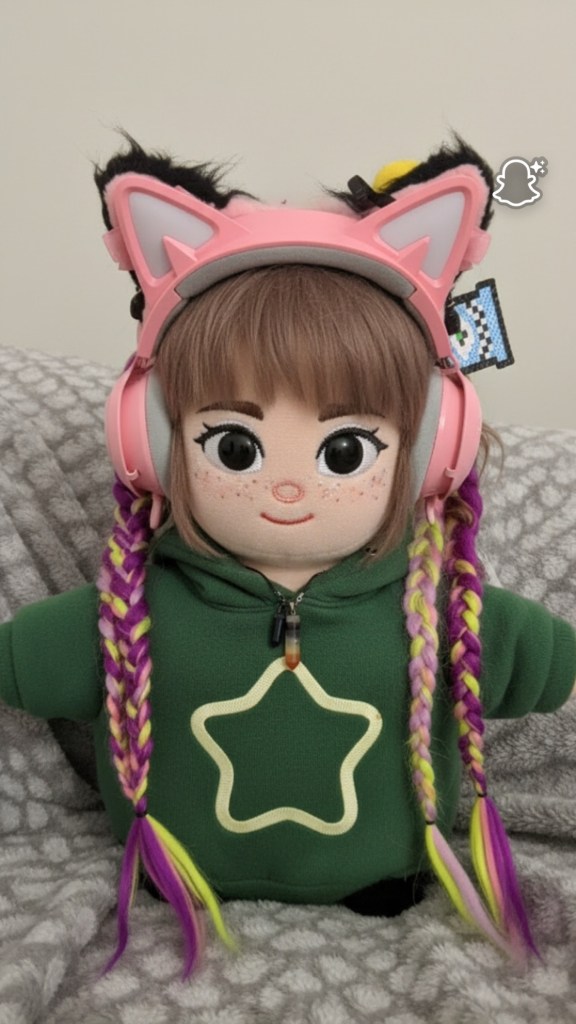
Personal moment: I lost my cockapoo Fuggler plush during Night 1, which definitely yanked me out of the vibe for a while. Even with that chaos, the overall energy stayed positive. I was able to refine it again, and lesson learned, not to bring anything to a show that I’d be upset enough to lose.
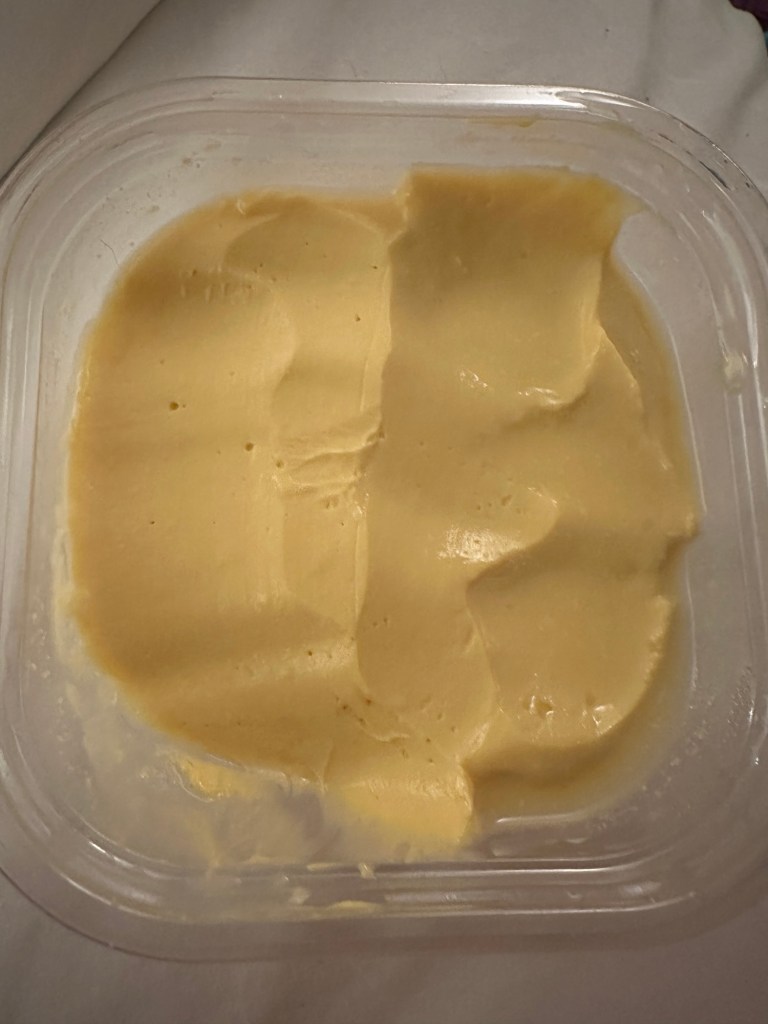
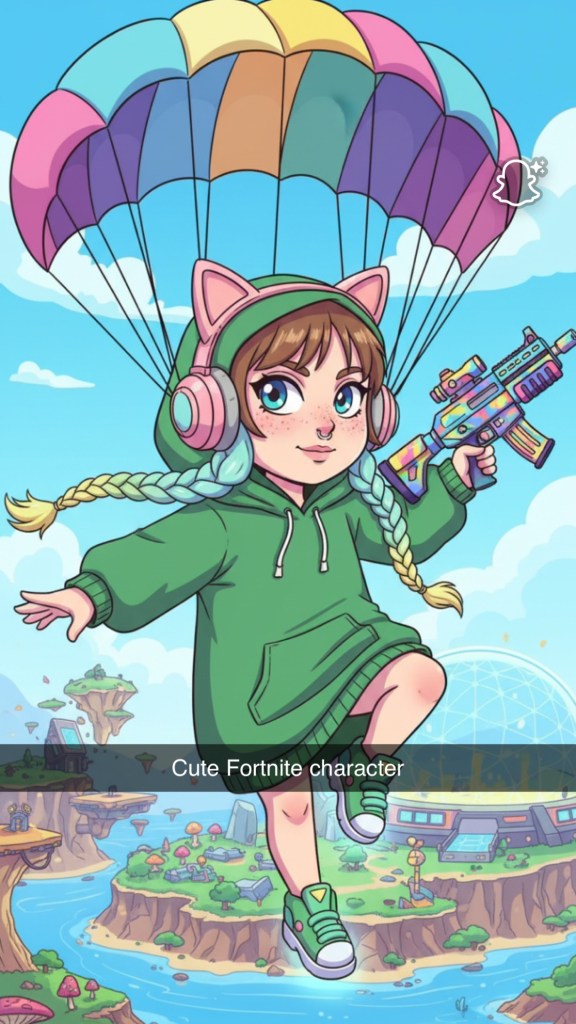
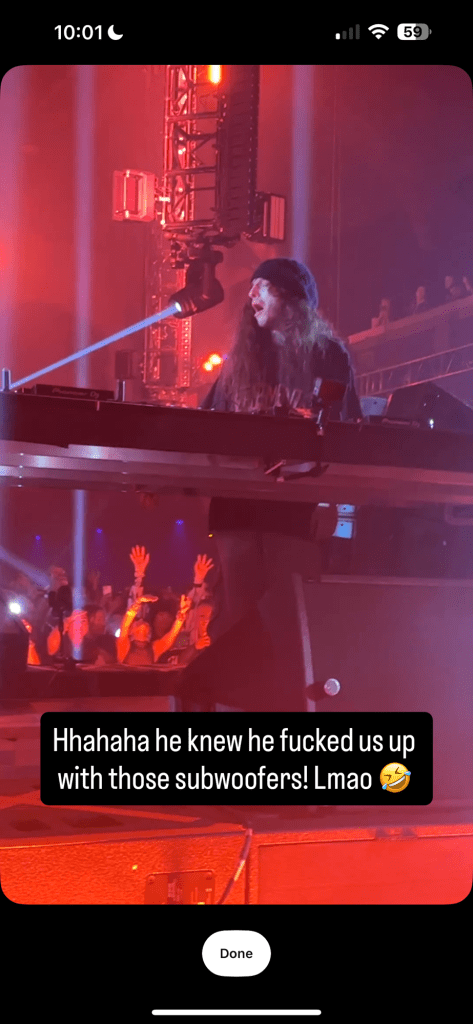
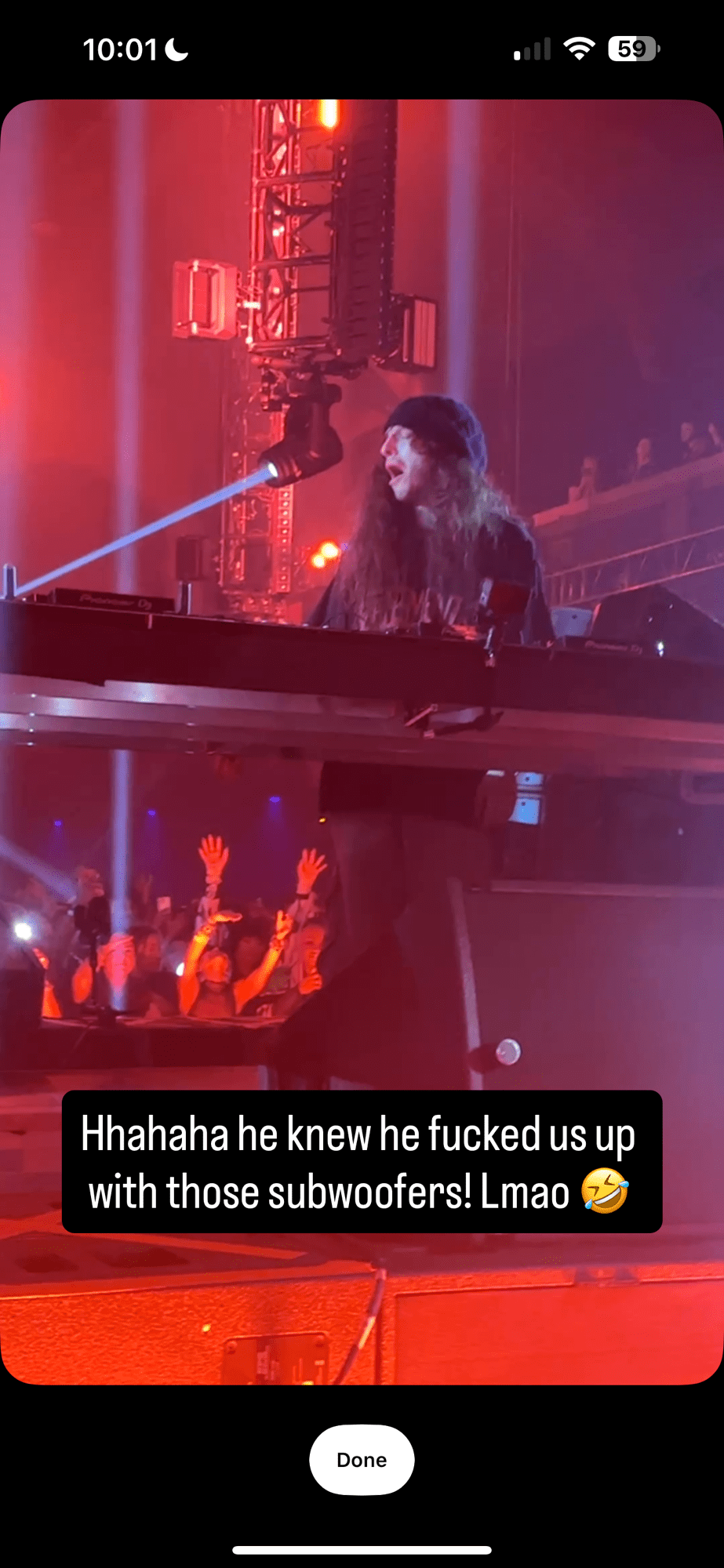
The first and ONLY time I’ve seen this man make a mistake during his set. He handled it like a pro. End of the night picture 🙂 Sweater on and keeping cozy! The cartoon of me at the end of Night 1 because Traditions. I was feeling a little sentimental when I was searching for food. I found Passionfruit Mousse. Thank you Bossa Nova’s for supplying me with a new memory.
Night 2 — Tough crowd energy, late arrival
Vibe: Not very PLUR in all honesty. Lots of heavy drinking, scattered fights, and too many folks there mostly filming. It gave the floor a tense, distracted feeling—like parts of the crowd were performing for their phones instead of engaging with the music.they didn’t want people moving around them, girls were there honestly more to gawk at the DJ than vibe with the crowd. I suppose there is always going to be those few but people were very territorial over their “spots” in the crowd this day, which made it very awkward. Shame on the people within the crowd trying to block movement from other grown ass adults.
Timing: I missed all the opening acts except the end of Grabbitz, who I really actually wanted to see. The tail end I caught was polished and melodic, but I didn’t see the build from the earlier sets, which I admit also set the mood for the night. As simple as it, that just means that I need to simply stick to my own practiced timing if I want to make sets on time. Follow my own timeline.
Man, obsessed with that guys vocals. Loved this!
Set flow: Subtronics leaned harder and darker—fewer playful detours, more sustained heaviness. Plenty of whiplash drops, some clever fake‑outs, and a run of VIP‑ish edits that felt intentionally more aggressive to cut through the chaos.
Production: Lasers and visuals were consistent, but the room’s mood overshadowed the show design. When pockets of the crowd were arguing or shoving, those moments broke immersion.
Crowd behavior: Security seemed busier; walkway traffic was choppy. Even sober, it was hard to stay zoned‑in with that much tension rippling through the floor.
Night 2 end of the night Photo. lol
Night 3 — VIP pre‑show, barricade perspective, mild acid
VIP: The album listening session was a treat—you could hear the arrangement choices clearly without crowd noise. It truly is something special to listen to this man talk and in his words “ramble” about his special interest. As someone is who Neurodivergent, it was very humbling to hear this man talk as I do when my anxiety hits. And I realized so much more about my other traits and symptoms by seeing them in my favorite DJ, off record. The Q&A felt candid: production stories, inspirations behind some themes, and how he builds the live show around tension and release. Nice community vibe; people asked smart questions. And our Subby didn’t disappoint in giving the most neurodivergent answers….. bouncing from subject to subject, to hyperfocus on his music, friends, and handling burn out.
Barricade: Being up front changed the experience—subweight felt ultra‑physical, and the timing of lasers/visuals was immaculate from that angle. Transitions read more clearly when you can watch the stage cues.
Set flow: Night 3 felt like a narrative: memorable intro, a mid‑section that showcased new material from the album, and then a victory‑lap final third mixing staples, flips, and quick genre detours. The pacing breathed more than Night 2—confident, not frantic.
Mild acid: It hit gently—colors/lasers bloomed a bit and the music felt wider, but not overwhelming. That said, it blurred some details I would’ve loved to remember more cleanly, especially transitions and IDs. But overall, the food I ate before hand (yes, my safe meal of chicken tenders) really helped keep my personality while enjoying a small trip.
Setlist shape across the three nights (noting what stood out sonically)
Intros: Cinematic builds into elastic, stop‑start bass—signature tension then release.
Core sections: Tearout and riddim anchors, peppered with fake‑outs, double‑drop moments, and occasional halftime grooves.
Tempo play: Short DnB sprints (I WAS IN LOVE! I felt personally spoiled) or quick BPM flips to reset energy mid‑set.
Variations night‑to‑night:
Night 1: Balanced and playful, strong opening‑night pacing.
Night 2: Heavier, more relentless—like he was cutting through the noise.
Night 3: Most “story‑like,” with new album cuts woven in and a satisfying final run. Since the new album dropped on the 5th, while he was playing his show, we got invited ultimately to an album release party.
The cartoon of the night.
Special guests and openers I actually experienced
Grabbitz: I only caught the end of his set on Night 2—clean vocals and big, emotive drops; a nice contrast before the heavier headliner energy. It was nice to see Subby call him back out to do another song together.
Cameos/guests: Across runs like this, quick on‑stage shoutouts and brief appearances happen, and Night 3’s VIP made Subtronics himself feel accessible and present before the show. I didn’t clock every guest by name during the sets, but the energy pops from those moments were there. It was nice to see his wife there supporting him for his album release! It was cool seeing Illenium there to support Jesse with their song on the new album as well.
Crowd, sound, and production notes
Sound: Low‑end felt tight most of the time; occasional hot spots depending on where you stood. Up front on Night 3, the subs translated beautifully—impactful but not muddy.
Visuals: Laser choreography was consistent across all three nights, and was insane to see some lights even created a spiral effect. This absolutely threaded the 6 day residency together.
Crowd dynamic:
Night 1: Open and friendly.
Night 2: Disconnected and tense—too much filming, not enough listening. “Concert” vibes vs rave vibes.
Night 3: More focused; VIP set a respectful tone, and barricade had better etiquette.
Why I’m choosing sober shows from here on out
Presence and memory: Sober nights (1 & 2) made the music clearer and the set structure easier to track. Night 3’s mild acid was novel, but it softened details I wanted to remember precisely.
Safety and comfort: Navigating crowds—especially on nights like Night 2—is simpler and safer sober. I could recognize people were being unpleasant this day and could move away from that energy. And in fact did, multiple times.
Connection: I feel more tuned into the artist and the community when I’m clear‑headed. PLUR lands better when I’m fully present. While driving wasn’t a concern due to hotel being right down the street from the venue, I like being able to get in my car and leave without having to feel like I need to stay behind.
Practicality: Easier logistics, better decision‑making, and less post‑show fog. I also remember times in my past where I was so messed up that I couldn’t realize how unsexy that was for my partner at the time, sloppily trying to fool around in the back of a Waymo. So all in all, after that situation and our breakup that followed later down the line, I knew that I no longer wanted to be that person. Learn my lesson and do better. So really, I’ve found I like me better without smoking, and without taking any drugs. Confirmed.
Final thoughts
Three nights in, Subtronics showed range: playful and welcoming, then crushingly heavy under pressure, then polished and story‑driven with album material.
The residency scale mattered—production felt custom‑fit to The Shrine, and the shows read like chapters, not repeats.
Crowd energy can change everything. Night 1 and Night 3 reminded me why these nights are special; Night 2 reminded me why etiquette and PLUR aren’t just slogans.
I’m locking in the sober path for future shows—more clarity, more connection, and more respect for the experience.
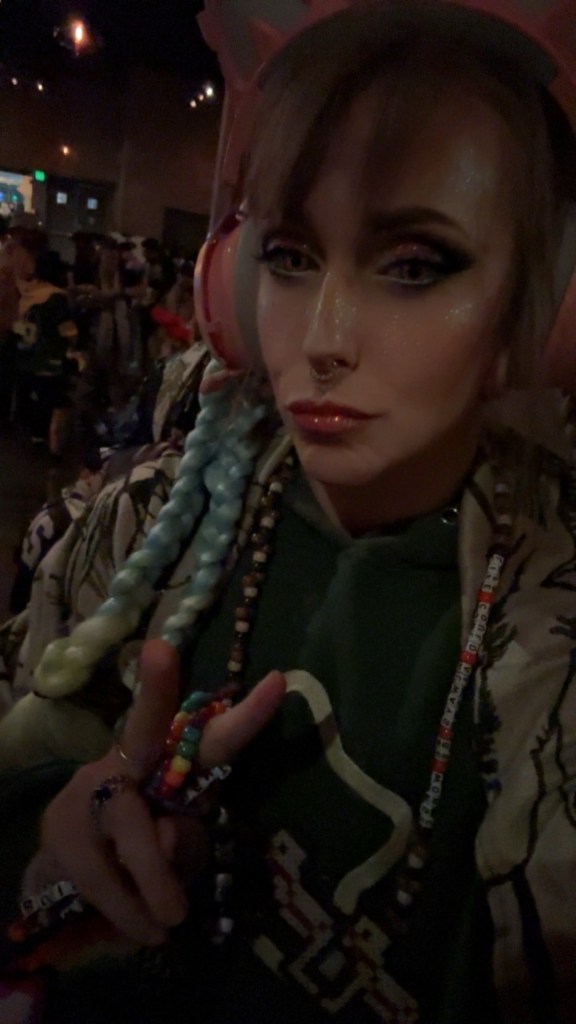
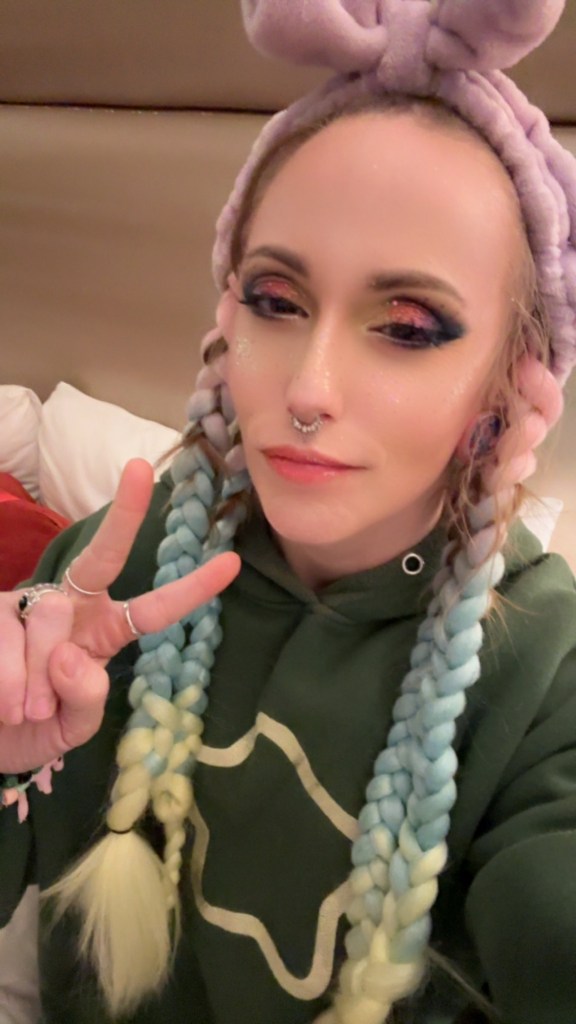
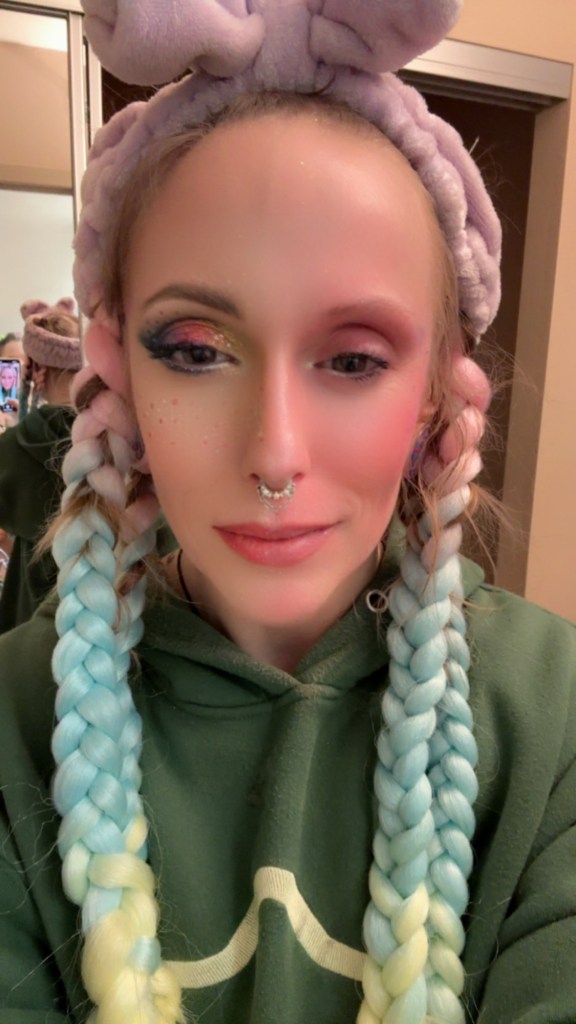
Time to remove the makeup of the night. Half on/ Half off. lol One of the funniest moments was honestly the faces he would make at us when he hit us with heavy wubz. He laughed at us quite a few times. It literally vibrated the whole front.
I lost my voice in the afterglow of bass, Subtronics stitching madness into midnight music, drops carving vowels out of me until my mouth held only thunder.
By morning—Voiceless, blankets, soft light on the wall— I lay still, taken care of like a vinyl in velvet, coffee cooled on the nightstand, laughter at the door, and somehow it was the best day ever: quiet, held, a chorus of kindness hummed at low volume.
Gratitude arrived like a calm beat between songs— a hand on the forehead, the right text, the gentle taste of Denica’s, the sweet permission to heal slower than the crowd moves. Healing, I learned, has its own BPM: not rushed, not late—just true.
When the old aches pressed play on memory, I replayed the words my favorite artist spoke— let them go—an echo that rewired the room. I can never unhear it. Jesse was right.
Choose friends who will critique you, who see the pulse of potential you can’t hear in your own chest, who slice the silence so your voice can return stronger. And if they don’t appreciate your truth, cut them off— the ones who only clap for the polished parts, who love the echo but not the note. Keep the people who push you past comfortable.
Now the spoon finds passion fruit mousse— golden, bright as sunrise on a festival wristband. I don’t wish we could share it anymore. I eat it happily, everyday if I want, and send your memory a blessing in your new timeline, like a balloon released into sky after the set ends, drifting toward another city of sound.
Then I turn back to mine: a room, a bed, a throat learning song again, gratitude cupped in both hands, healing stitched through every beat. Proud of the road behind me—its potholes, its glitter, its rain— and proud of where my feet land now, soft, sure, ready for the next drop. My voice returns—rasp to river, whisper to wave— and I am here, fully here, bright as passion fruit, steady as bass, alive in my own timeline, unafraid to let go, unafraid to go on.
I count heartbeats in purrs, dose myself on whiskered chemistry— soft paws kneading my chest until oxytocin opens like a window. I need nothing here, but the universe feels owed to me anyway— not in gold, not in thunder, only in the right to breathe without apology.
When I see animals, I become water. A doe tilts its head, and I spill. My cats blink slow trust, and the world puts down its weapons. My ribs loosen. I remember I am not a fortress, I am an open field.
I made myself smaller online— a whisper where I used to be a flare— and somehow my days got wider, my footsteps longer, my yes more honest. I became the room I enter, the tteokbokki I stir, the friend who listens to the sound of wind on the window and calls it music.
I have no regrets, only old misunderstandings set down like stones beside a river that kept moving. Once, I prayed for one person to understand me, to carry my map and find the hidden clearing. Now I laugh at my pockets—empty— then pull out a brush, a pen, a handful of breath, and draw the clearing myself.
Creation was always the answer— the door that didn’t creak because it never closed. I write in the margins of quiet, paint with silence and cat fur and late light. I learn depth by living simply: a bowl, a book, a window where the moon cleanses my healing crystals, the small movements of a cat’s shoulder blade rising and falling against my palm.
I need nothing, and I deserve everything: the everything of a life that fits, of mornings that open like fruit, of nights that forgive.
And now I’ve found art— or maybe it found me, scratching at the screen door like a stray, then curling, sure as gravity, in my lap. Purr by purr, I become the person I once wanted to meet, the page that writes back, the quiet that blooms into color.
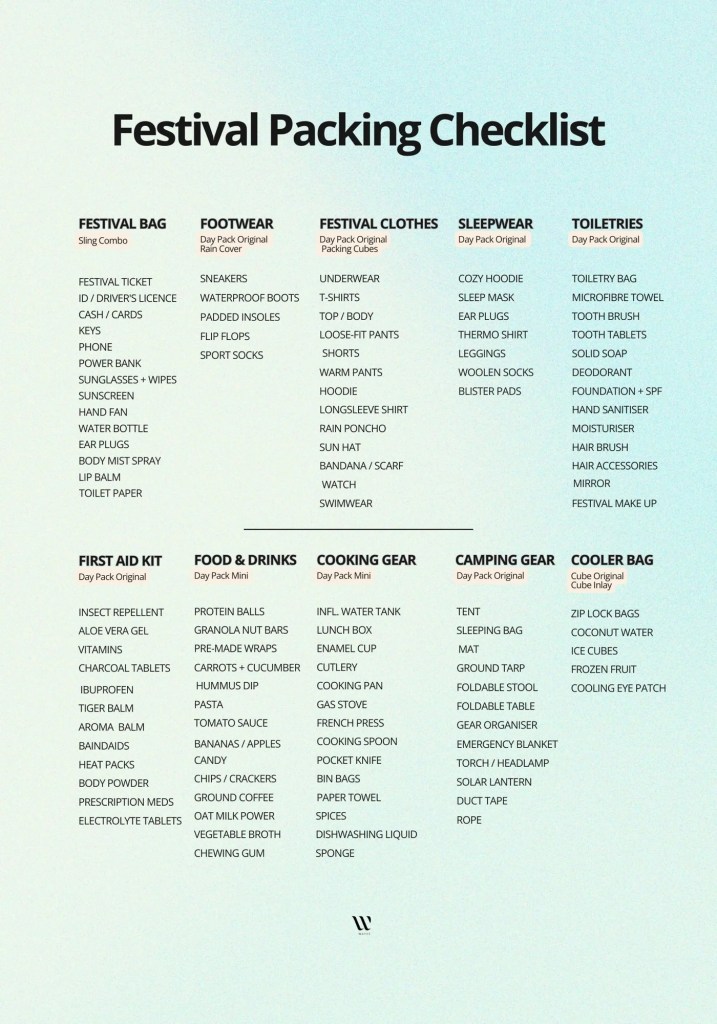
Raves and festivals are amazing—until packing melts your brain.
I don’t know about you but my house always looks like a break in happened when I’m trying to get ready for an event due to the rush of anxiety hitting my body when I haven’t prepared for it first. Objects thrown, I’m starting to sweat into my outfit without even dancing in it! AuDHD paralysis can be a bitch sometimes but nothing prepares me for the meltdown and sometimes embarrassment/shame I would feel the next day coming home from that same night of fun and am constantly tripping over my belongings like clothing mountains and tubes of glitter everywhere just to use the bathroom in the middle of the sleepy morning.
In the case of my ADHD friend Taylor, it makes being on time a chore, often over packing for events, and making multiple trips once she’s in line because she forgets her ID in the car. I’m sure a lot of you have been there too. Executive dysfunction is not fun to experience for yourself but we are slowly overcoming it, one Rave at a time. I love her to pieces, quirks and all. We can always make adjustments and have patience as we navigate our traits together. That’s what friends are for.
Here’s a neurodivergent-friendly system that reduces overwhelm, spreads effort across days, and makes sure you don’t forget the crucial stuff. Shoutout to TayTay’s new golden tip: pack for 30 minutes a day in the week leading up to the event to keep focus high and stress low. 💜
Why This Works
Visual over verbal: see everything at once, reduce working-memory load.
Chunked tasks: 30-minute sprints prevent fatigue and decision paralysis.
Modular kits: prebuilt containers you grab and drop into your bag.
Go Bags: different sizes for different contexts, so you’re never overpacked or underprepared.
System Overview
Visual Master Checklist (wall poster or whiteboard).
Color-Coded Kits (clear pouches/bins with labels).
Go Bags (EDC, Venue, Car/Campsite).
7‑Day, 30‑min Pack Plan (TayTay method).
Post-Event Reset so future-you wins.
1) Visual Master Checklist
Print this on one page, or write it big on a whiteboard. Check off with a dry-erase marker as items enter a kit or bag.
I’m a raver with a heart of gold, earplugs in, head bobbing on beat. Lights flash, heavy bass steadies me. I map the exits. I sip water. I breathe.
I’m Goldilocks on a dance floor, Enjoying my life, welcoming my “just right” The porridge is the vibe, the chair is a boundary, the bed is how we rest together.
Bear One: Avoidant Attachment. He stands at the edge of the crowd, eyes careful, smile closed. He says, I’m fine, don’t worry—then vanishes. His porridge is too cold—no steam, no scent. His chair looks sturdy until I lean. His bed is made with sharp corners— no place for a future let alone the morning. I say: I care about you, but I can’t love a ghost, I can’t slow-dance through a door that won’t open.
Bear Two: Anxious Attachment. He texts before the drop, during, after— Are you here? Are you okay? Do you still want me? His porridge is too hot— all flame, no breath. His chair tilts me forward until I tip. His bed I don’t meet, rushing won’t let us sleep— checking, checking, checking. I say: I like for you as a friend as I need space to dance, room to finish a thought, silence to hear my own song.
Then—Bear Three: Me. I become the “just right” I was seeking: porridge warm, boundaries clear, a chair that holds both of us, balanced, a bed where trust is soft and sleep comes easy. I am still Goldilocks, yes— but I am also the third bear now, and I’m looking for that bear, now myself, in another.
Future Bear: Secure Attachment. They meets my gaze, then looks away, then back— no tug, no vanish. They asks, Want water? Need quiet? Want to dance? The porridge is warm— steady heat I can trust. Their chair fits my shape— I sit, I rise, it’s still there. A bed so soft without swallowing me. We sleep, we wake, we laugh about our dreams and the stories of the night before.
With them, I can info-dump about the DJ’s set, about stims that help, about sunlight hurting. They listens, not to fix me, but to know me. They tells me what they feel, not what they think I want. They don’t fear my questions. We take breaks when my senses spike— hallway, cool air, counting breaths. We return when I’m ready.
But until then, I’m still Goldilocks. I bring my own spoon and seat cushion. I taste slowly. I sit briefly. I try the bed last. I choose what’s kind to my nervous system. I pick “just right” by how my body unclenches, how my words find room, how the night ends gentle.
Until we meet, Music can be that bear— steady arms of wonky bass, A Pash of melody when night gets drafty. Community can be that bear— hands up, circle wide, water shared, shoulders checked, we keep each other safe under the lasers.
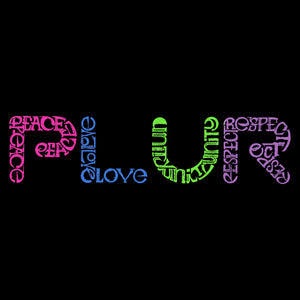
And like the old story’s ending, I learn: I won’t enter homes—or hearts—without permission. I always have choices. I’ll think twice, every time. I won’t seek the too-cold or the too-hot; I won’t chase what isn’t secure, or anyone who doesn’t live by the rave’s promise: Peace, Love, Unity, Respect—PLUR for you, and PLUR for me. I keep my door kind and locked, my welcome warm and clear. If you carry your own key of consent and care, come in. If not, I wish you well through the smell of street meat on your walk in the woods.
So I dance, third-bear steady, Goldilocks brave— home in my body, home in the crowd, home in the music, until “just right” finds me, and we make a cottage we both have keys to.
I used to hear “love is love” only as a rallying cry for equality in romantic relationships, especially in the LTBTQ community. Beautiful, necessary—yes. But recently, I heard it explained in a way that unhooked my brain from a single pedestal: it’s not just about who we date. It’s about decentering romance as the main character and honoring every form of love that keeps us alive—family love, platonic love, community love, the kind we build on a dancefloor at 2 a.m. when the bass is deep and everything feels electric and soft.
As someone who is AuDHD, I tend to think literally. For years, I put romantic love at the top, hyper-fixating on partners, building pedestals, and confusing intensity with priority. That love wasn’t “wrong,” but it became the only lens I knew. Relearning “love is love” is me widening that lens. It’s recognizing that the love I share with friends—especially in the rave scene—is not the understudy of romance. It’s a headliner of its own kind: dependable, playful, ritual-rich love that is just as intimate and just as life-giving. Let me tell you, intimacy was another word I had to also relearn.
This is about how I’m learning to love widely: through presence, boundaries, and care. It’s also about beads, perlers, and Narcan—and why those tiny details matter.
Love Beyond the Pedestal
Romance is one kind of love—not the summit. When I decenter it, I can:
Give my friends the depth I once saved only for partners.
Stop treating romantic attention as proof of worth.
Let each kind of love be complete on its own terms.
When I treat platonic love like it’s “real love,” my nervous system calms down. I’m less likely to spiral into all-or-nothing thinking with partners. I can pour care into friendships without feeling like I’m “misplacing” it. I can feel whole—because I’m connected.
I’m not anti-romance. I’m anti-monopoly. The more I honor friendship, the more generous my life becomes—because love stops bottlenecking through one person or one idea of “forever.” Perlers on a wrist, a hand on a shoulder, a bottle of water pressed into your palm—these are vows, too. Small ones, repeated often, and somehow more honest than grand speeches shouted over subwoofers.
“Love is love” means all these loves count. The rave, the craft table, the group chat, the ride home. The ways we make space for each other’s minds and bodies. The ways we leave no one behind when the sun comes up.
If you’ve been waiting for romance to give you permission to feel deeply, consider this your sign: your friendships are already profound. Your community is already a love story. And that beadwork around your wrist? That’s a little, wearable proof
A Raver’s Guide to Loving Your Friends Well
The dancefloor is a living ecosystem. Loving your people there is both poetic and practical.
1) Rituals of Care: Trinkets, Kandi, and Perlers
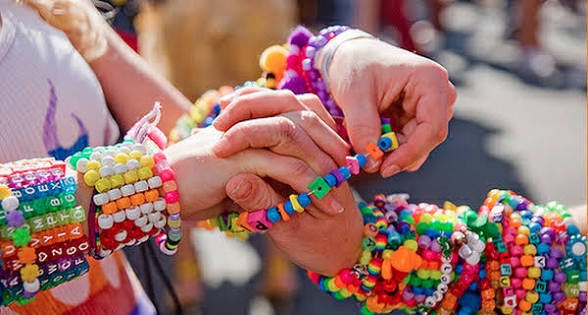
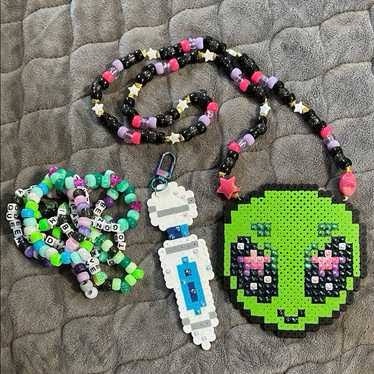
Kandi bracelets: Little wearable promises. I make them with colors and words that remind my friends who they are: “ENOUGH,” “HYDRATE,” “BE KIND” and “SAFE” along with some spicy or sassy phrases. “Butt water” is still my favorite.
Perlers: Pixel art made from fuse beads—charms, necklaces, pendants. I started making custom perlers for friends with their favorite symbols, artists, or inside jokes. It’s a love letter in beads: time, attention, embodiment. Perlers feel like talismans—tiny shields that say “you belong here.”
Gifting etiquette:
Ask and offer, don’t assume. “Can I gift you a kandi/perler?”
Consent, even for sweetness. Not everyone likes being touched or surprised.
Trade with intention. The point isn’t quantity; it’s connection.
These objects aren’t just cute—they’re anchors. For AuDHD brains, tangible tokens help recall safety and belonging when the crowd overwhelms.
If you’ve been waiting for romance to give you permission to feel deeply, consider this your sign: your friendships are already profound. Your community is already a love story. And that beadwork around your wrist? That’s a little, wearable proof.
More than just the Physical…
2) Listen for Needs and Boundaries (And Believe Them)
Before the event: “What do you need to feel safe tonight? Any hard nos? Any early exits?”
During: “Color check—green/yellow/red?” Short, concrete check-ins work well in loud spaces.
After: “Anything I missed? Anything you want different next time?”
Scripts that help:
“I’m stepping out for air for 10 minutes—want company or solo?”
“I’m overstimulated—can we find a wall/exit/earplug break?”
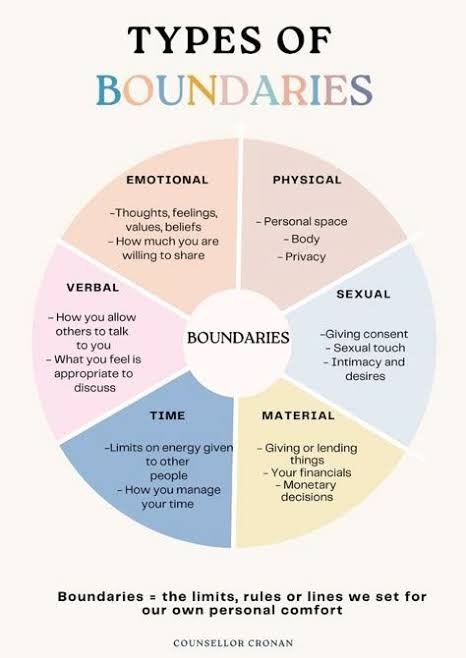
Boundaries are love in action. They’re not a wall; they’re a map.
Let’s keep each other alive. Test your party favors. Please. And for the LOVE of god, please do NOT drive if you’re in any way NOT sober.
3) Harm Reduction Is Love
Not medical advice—just community care principles to learn and personalize.
Carry Narcan (naloxone) and learn to use it. Many cities offer free kits and brief trainings; check expiration dates and storage guidelines.
Test substances. Reagent test kits save lives. If it’s not tested, rethink it. Dancesafe.org is a good option before hand and often times, you can find them at events as well.
Hydration + electrolytes. Water is great; add salts so you don’t crash.
Earplugs or in my case, HEADPHONES. Protect your future joy—tinnitus is forever.
Buddy system. Arrive together, leave together. Share live locations if comfortable.
Cooling and Food breaks. Overheating sneaks up. Schedule breathers. Nothing has saved my ass better than Chicken Tendies on multiple occasions. If you’re taking any form of party favors for the night, please be smart and have some sort of food in your system for the day. And REFUEL. Carrying Candy is also a go to of mine and has helped a few people in their Crash outs.
Consent culture. Ask before touching, filming, or posting. “No” is a full sentence. Something I’ve also learned not through my parents, but honestly through the rave scene. And no matter how I learned, I am still thankful and will teach what I know. I’ve also had my ass grabbed by people who think a cute girl is free terrain for that. It’s NOT. Looking cute is NOT consent.
Harm reduction says: I want you alive, free, and dancing next week too.
4) Being Yourself Is Also a Gift
For a long time, I thought I had to perform a certain version of “good friend.” Now I’m practicing:
Naming my limits without shame: “I can stay until 1 a.m. and then I need my quiet.”
Claiming my sensory needs: breaks, stim toys, preferred spots in the venue.
Bringing my interests: perler crafting, kandi sessions, playlist swaps, nerdy deep dives.
Sharing my timeline: “I respond slowly after events. I still care.”
The right people don’t need the performance. Your unvarnished presence gives them permission to be real too.
Reframing Hyperfocus as Care, Not Control
Hyperfixation once made me see partners as the axis of my world. I’m learning to channel that focus into community care that doesn’t consume or control.
Make a “care kit” bin: earplugs, band-aids, gum, cough drops, electrolytes, hand sanitizer, hair ties, spare battery, granola, wet wipes, small perlers or kandi for morale boosts.
Build perler nights: quiet pre-rave hangs where we craft, chat boundaries, and plan rides. It’s social, soothing, and sets everyone up to feel held.
Rotate roles: one person handles hydration reminders, another watches the time for breaks, another navigates the map. Shared care prevents burnout.
Micro-Moments of Love on the Dancefloor
Tiny things that change the night:
A perler presented to someone right before their favorite drop.
A hand signal: “water?” “earplugs?” “exit?” established ahead of time.
Standing shoulder-to-shoulder at the edge, letting a friend decompress.
A text the next morning: “You were radiant last night. Thank you for dancing with me.”
These moments are small, but they stitch a community together.
What “Love Is Love” Means to Me Now
Love is the kandi I knot with your name and the perler I melt just right so it won’t break.
Love is carrying Narcan because I want you home safe.
Love is accepting your “no” and trusting your body’s wisdom.
Love is a boundary that keeps the friendship renewable.
Love is letting romance be love—and letting friendship be love, too, without ranking them.
I’m still literal. Maybe I always will be. So here’s my literal translation now: love is love is love is love, and the shape it takes—romantic, platonic, familial, communal—doesn’t change its worth. When we stop crowning one form, the rest can finally breathe.
And on the nights when the bass is heavy and the lights blur and the crowd surges, I’ll be the one with earplugs, water, Narcan, and batch of homemade perlers—reminding you that you are loved, and already enough.
Perlers, PLUR, and the Language of Friendship
In rave spaces, love shows up in objects and rituals. Not in diamonds or dozen red roses as I had seen in movies (I instantly thought of the Scene in The Room where the main character buys a dozen red roses), but in perlers—crafted necklaces, cuffs, charms, and keychains made from fused Perler beads. They’re tiny mosaics of care, traded and gifted with a little ceremony: hand to hand, palm to palm, a look in the eyes, a hug if consented. It’s art, but it’s also a message: I see you. I thought of you. You belong here.
The Magic wand is an all time favorite of mine.
Perlers are time made tangible. Someone sat down and chose your colors, your symbols, your initials, that inside joke only five people would get.
They’re community memory. You can hold one and remember the exact moment you received it—the bassline, the sweaty joy, the laughter.
They’re gentle social bridges. For those of us with social anxiety or who are neurodivergent, trading perlers can be the perfect script: offer, connect, smile, move at your own pace.
The more I’ve leaned into this, the more I’ve felt romance stepping off the pedestal. The love I feel when a friend ties a perler around my wrist is not “less than.” It’s not practice for “real love.” It is real love—just arranged differently.
Rewriting Intimacy: Friendship as a Primary Relationship
Here’s what I’m learning to name out loud:
Friendship can be primary. It can be the relationship you plan your week around, the bond you protect with boundaries and repair with care.
Intimacy isn’t a genre reserved for romance. It’s how we share playlists, check each other’s water bottles, swap earplugs, and walk each other to the bathroom at 2 a.m.
Commitment is not measured by labels alone. It’s measured by who shows up when the lights come on and the glitter has to be cleaned off the floor.
When I stopped expecting romance to be the sole container for depth, I noticed how deep my friendships already were. Friends who bring me my stim toys without asking. Friends who text “home safe?” before they even get in their Uber. Friends who know the exact moment I need to step outside, breathe, and find a quieter corner of the world.
Romance is one kind of love—not the summit. When I decenter it, I can:
Give my friends the depth I once saved only for partners.
Stop treating romantic attention as proof of worth.
Let each kind of love be complete on its own terms.
When I treat platonic love like it’s “real love,” my nervous system calms down. I’m less likely to spiral into all-or-nothing thinking with partners. I can pour care into friendships without feeling like I’m “misplacing” it. I can feel whole—because I’m connected.
AuDHD, Sensory Care, and the Dancefloor
As an AuDHD raver, I used to think my needs were “extra.” Now I see them as a map for kinder spaces:
Sensory planning: Knowing the venue layout, where the quieter edges are, and how to get fresh air quickly.
Communication tools: A “thumbs up/down” check-in, color cards, or just a sentence like, “If I step away, I’ll be back soon.”
Self-soothing: Chewelry, stim toys, soft textures, predictable snacks. These are not quirks—they’re gear.
Exit strategies: It’s okay to leave early or to choose a spot where you can sway instead of bounce. Dancing is not a test.
When friends honor these needs, I don’t feel “managed”—I feel loved. And when I honor theirs, I feel the power of being part of something that treats difference as a feature, not a glitch.
Rituals That Keep Us Close
A few friend rituals I love that make community feel sturdy:
Trade perlers at sunset before the first big set, with a quick intention for the night.
Do a “gear circle” before going in: water, plugs, meds, ID, plan.
Pick a “home base” and name it (“the left tree,” “glow arch,” “back of stage right”).
After the show, share three gratitudes—one for the music, one for someone in the crew, one for yourself.
Once a month, have a crafting hang—remind yourselves love isn’t event-dependent.
Hope this guide can help yourself rethink the phrase “love is love” like it has for me. Thank you for reading!



 Swipe Left On Perfection