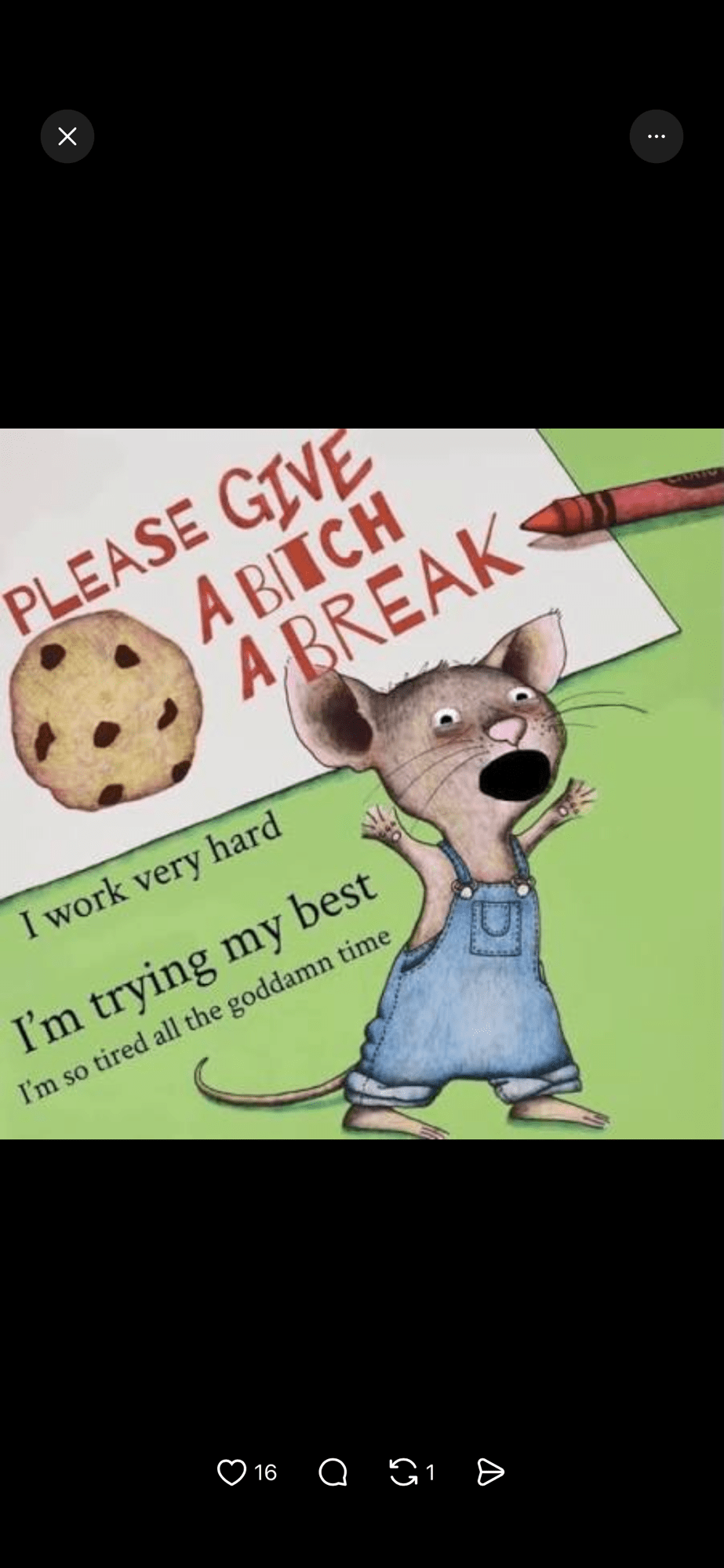
There is a specific kind of disappointment that happens when you start to like a friend. The type where you start to crush on them a little bit, become facinated in their life and their mind, and you’re in that phase of “maybe”—testing the waters, looking at the possibilities, and beginning to build a foundation of trust. But recently, I learned that the most important part of “getting to know someone” isn’t just listening to who they claim to be; it’s watching how they handle your vulnerability.
The “Solution” That Changed Everything
It started when I was honest about a stressful day. I was looking at my finances, realizing my hours were short, and explaining my plan to fix it. This was a moment where I was inviting a potential partner into my real world. I told him about a problem I was having and my solution to remedy it (add another job).
His response was a “solution” I didn’t need that made my skin crawl: he said “Have you thought about OnlyFans?”
In an instant, the “friend” I thought I was getting to know disappeared. My body had an immediate somatic reaction. My nose scrunched in disgust. I felt my heart drop in disappointment. Jaw tighten. Tears fall. I felt a physical pulling back—a tightening in my chest. My intuition was screaming that this person didn’t see my character or my work ethic; he saw a commodity. I also realized at that point that the respect he claimed he extended to women wasn’t there for me. I realized then that I could never build a future with someone whose first instinct was to suggest exploitation.
The Exhausting Work of “Explaining” Respect
Because we were friends, or rather I was giving him an opportunity, I tried to give him the benefit of the doubt. I actually took the time to explain why his defensive “I guess I’m just the bad guy” speech was a manipulation tactic. I sat there and did the emotional labor of teaching “Respect 101” to a man I was interested in.
I listened. I paused. I waited for him to meet me halfway.
But during those silences, I felt the heaviness in my shoulders. I realized I was already working too hard. If I have to provide a manual on how to treat me with dignity before the friendship has even started or we cant even hang out , the “potential” is already dead.
The Final Mask-Slip: The “Regular” Slur
The “shaky ground” of our friendship finally gave way today. In a conversation about his “different caps” (the versions of himself he shows to different people), he admitted to regularly using the N-word with his friends.
The most telling part? He acknowledged that he knew I didn’t like it, and then he said it anyway. Right there. In front of me. In the same sentence of my boundary.
The “disgust” I felt earlier returned, but this time it was definitive. It wasn’t a “slip”—it was a reveal. He showed me that he has no control over his disrespect because it’s baked into his “regular” self. By choosing to use a slur in the same breath as acknowledging my boundary, he told me everything I needed to know about his character.
Trusting the Disgust
The disrespect is strong with this one, and I’ve realized I can’t be bothered to fix it. I’m not angry; I’m clear. That’s not a knock to my self worth. I gave my effort and remained respectful even when I was angry, disgusted. And I left peacefully. And revoked access to continuing conversation. Being respectful is a prerequisite to my energy and treating me poorly by being yourself is something to consider.
I recognized the physical signals my body was sending me:
• The coldness in my gut that signaled the end of my interest.
• The mental “click” of realizing I don’t actually know—or like—this person due to the energy I am reading that keeps telling me it’s fake. I can be attracted but that’s not the same as respected so it’s a no from me. I want a soul connection. Someone I can melt into and pour desire onto, nurture, be soft around. Not constantly protect myself from.
• The peaceful realization that I don’t deserve to be treated this way.
I’m grateful that he showed me who he was before “we” ever became an “us.” I’m giving him the “second shot” he took to prove his character, and I finally believe the evidence. I don’t need to argue with him, and I don’t need to explain myself anymore. My body told me he wasn’t safe, and for the first time, I’m listening.
The “Different Hats” Deception: When Respect is a Performance, Not a Value
I used to think of people as puzzles. I thought if I listened closely enough, decoded the subtext, and applied enough empathy, I could understand the “why” behind the disconnect. But I’ve learned that some puzzles aren’t meant to be solved—they are meant to be discarded.
We talked about the Madonna-Whore complex. It’s that subconscious blueprint where a man divides women into two rooms: The “Sacred” (his mother, his sister, the women he protects) and the “Others” (the women he desires but doesn’t truly respect).
I saw the vivid line he drew. He could be “informatively respectful” when it suited him, but he couldn’t explain why it was okay to speak to me in a way he would never dream of speaking to his family.
The Performance of the “Hat”
In our final conversation, he gave me the smoking gun. He told me he has to wear “different hats” around me.
When a man tells you he’s wearing a “hat” to be respectful, he is telling you that decency is a chore. He is telling you that his “real” self is someone who doesn’t value your boundaries. He isn’t practicing integrity; he’s practicing stagecraft.
He went as far as to acknowledge he knew my boundaries—specifically my boundary around the N-word—and then proceeded to use it in the very next breath.
The Mask Didn’t Just Slip; He Took It Off
There is a specific kind of arrogance in acknowledging a boundary while simultaneously violating it. It’s a power play. It’s a way of saying, “I know what you require to feel safe and respected, but my comfort in being my unedited, crude self is more important than your peace.”
He wanted to be the “warrior” and the “scholar,” but he couldn’t even manage the basic discipline of a clean tongue for twenty minutes.
My Role as My Own Protector
I’ve been writing about my future husband. I know that man won’t need “different hats.” He won’t see respect as a costume he has to put on to keep me around. He will be a man of singular character.
I realized that if a man cannot protect my ears from a slur he knows I hate, he will never be the man to protect my life, my finances, or my dignity. He wouldn’t be the man standing between me and the struggle of “selling myself” to survive; he’d be the one watching from the sidelines, intellectualizing my struggle as “empowerment.”
The Final Audit
The ache is there, I started to like this man, but the door is closed because a repair is not believable at this point in time. I stayed in “observer mode” long enough to collect the data I needed. This man may like women, but he can’t respect me. He doesn’t like me. And I don’t like this behavior. I trust the actions, not the words anymore. “I do respect you” is brought with disrespect and the inability to stop and be kind to me instead? For shame. Their loss though.
• The Data: He lacks the spine to sit in his own shame.
• The Conclusion: He has no more shots.
Radical accountability means I don’t just hold him to a standard—I hold my life to a standard. And that standard doesn’t have room for “different hats”. I need solid good character. Not perfection, but a baseline of respect.
Reflection for the Reader
When you’re “interested” in someone, it’s easy to ignore the red flags because you want to see the potential. But have you ever had a physical reaction—a feeling of disgust or a need to pull away—that told you the truth before your heart was ready? That’s your dignity talking. Listen to it.
 Swipe Left On Perfection
Leave a comment